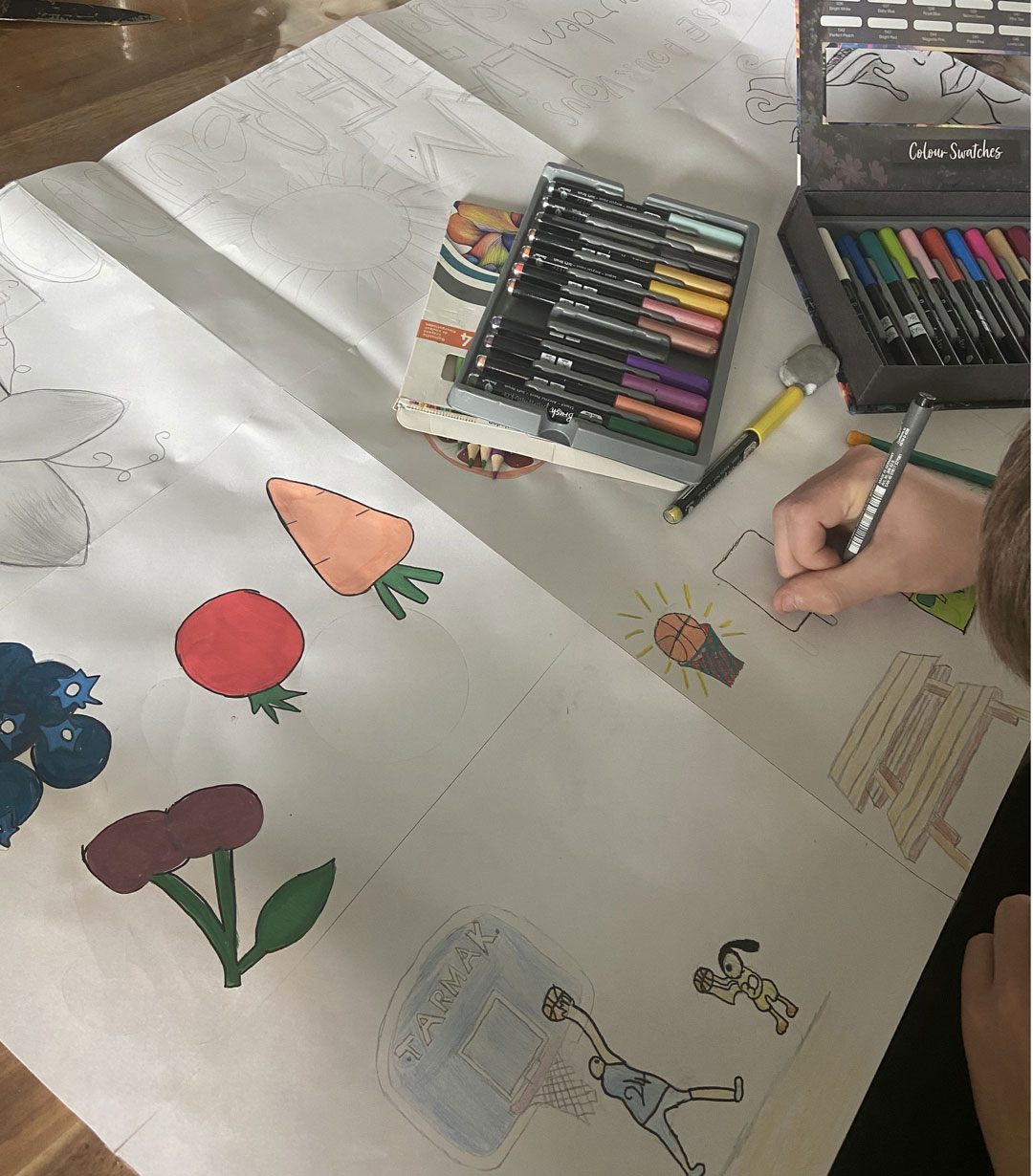
As part of my first-year Master’s program, I completed an internship with the association *La Sauvegarde du Nord*. I designed and facilitated a participatory project at *La Traversée*, a small-scale facility for adolescents.
After an initial observation phase, I identified a lack of privacy in the garden caused by conflicts with neighbors. I then devised a privacy screen made from recycled pallets, designed and built in collaboration with the young people.
Through several drawing workshops centered on the garden theme, the participants created the visuals that were subsequently incorporated into the structure.
I handled the graphic design, technical oversight, and fabrication, adapting the structure to the site's specific constraints.
This project transformed a practical need into a collective achievement, while giving the adolescents and educators an active role in shaping their environment.
PROJECT TYPE
Social design
2026.



As part of my first-year Master’s program, I completed an internship with the association "La Sauvegarde du Nord." There, I designed and facilitated personalized projects at *La Chrysalide*, a small-scale facility for young children.
My work aimed to offer each child a project tailored to their personality, interests, and needs.
Using an approach rooted in active listening and building a bond of trust, I worked with each child to create a "lucky charm" keychain—a unique object reflecting their tastes, memories, and/or aspirations.
PROJECT TYPE
Social design
2026.


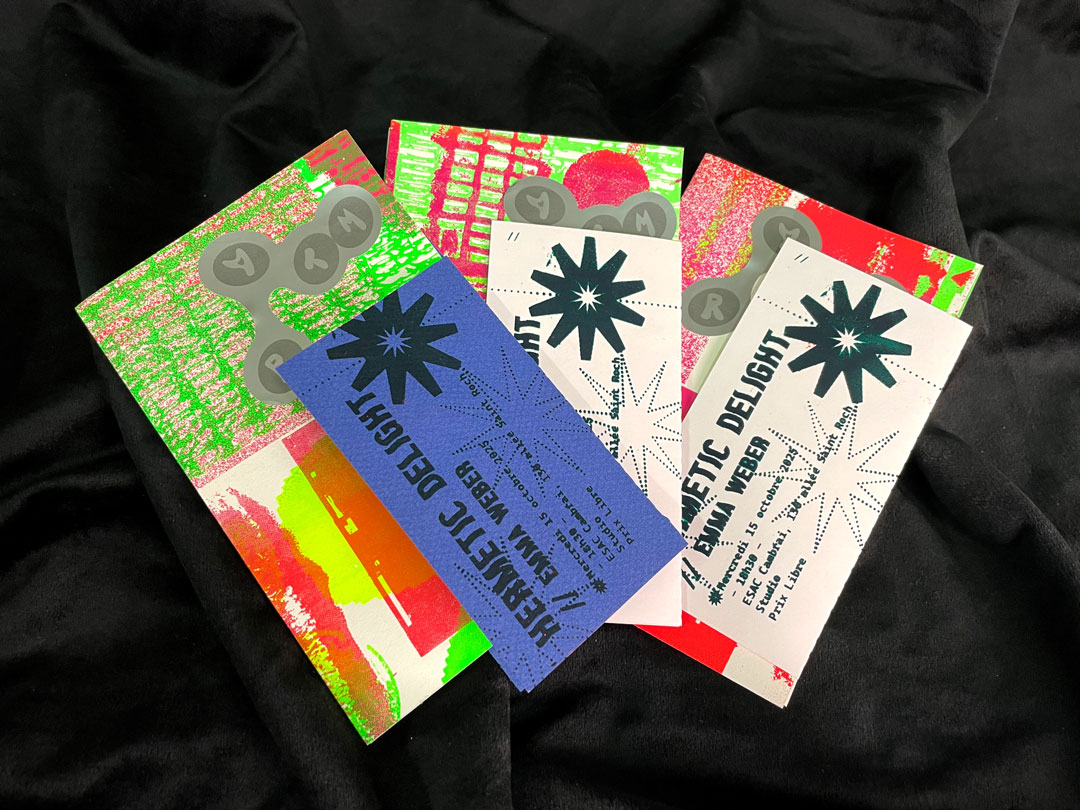
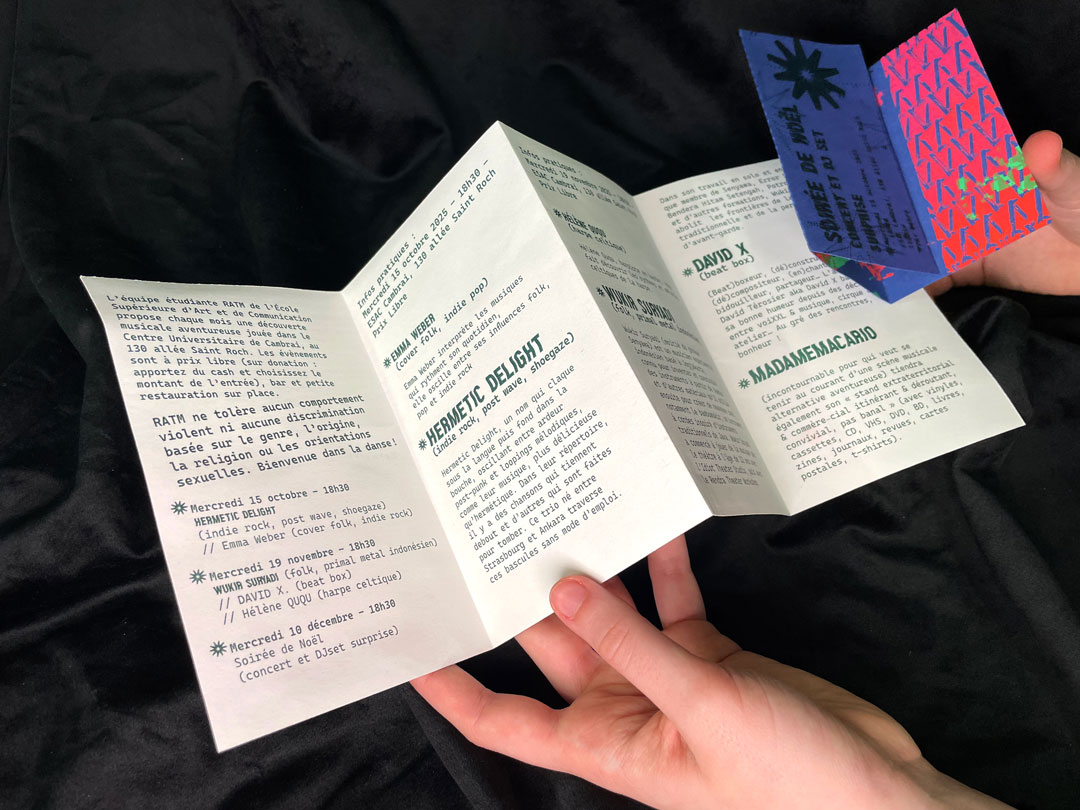
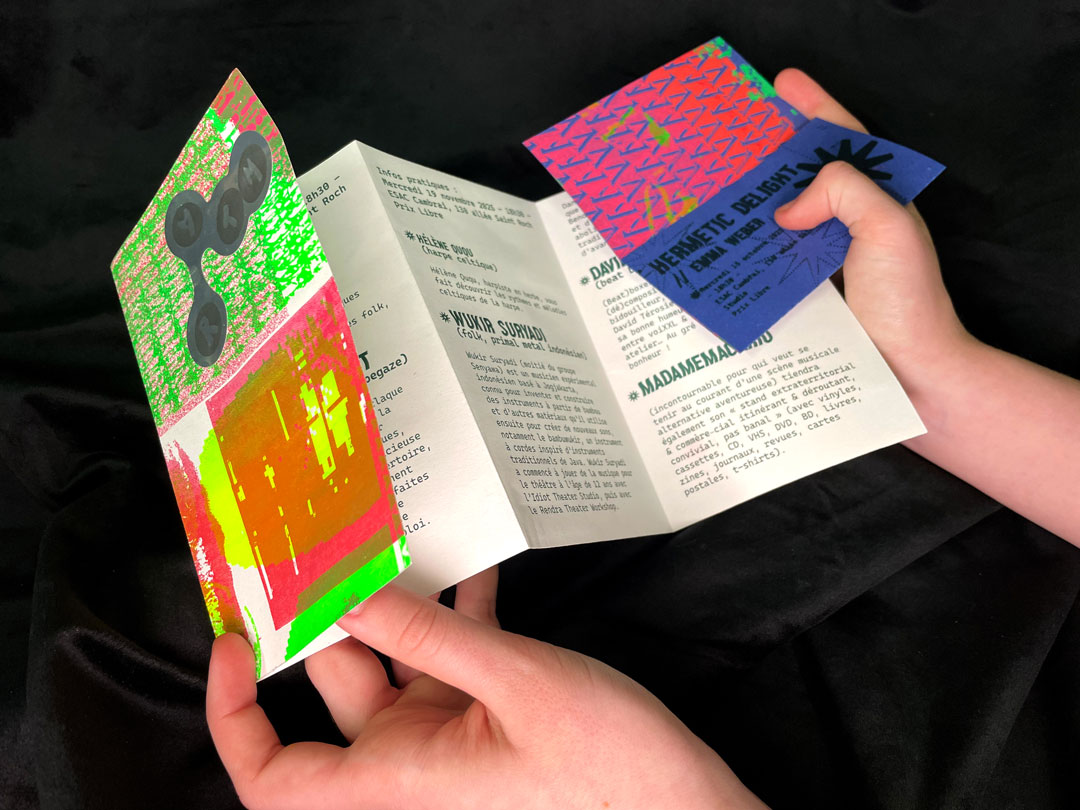
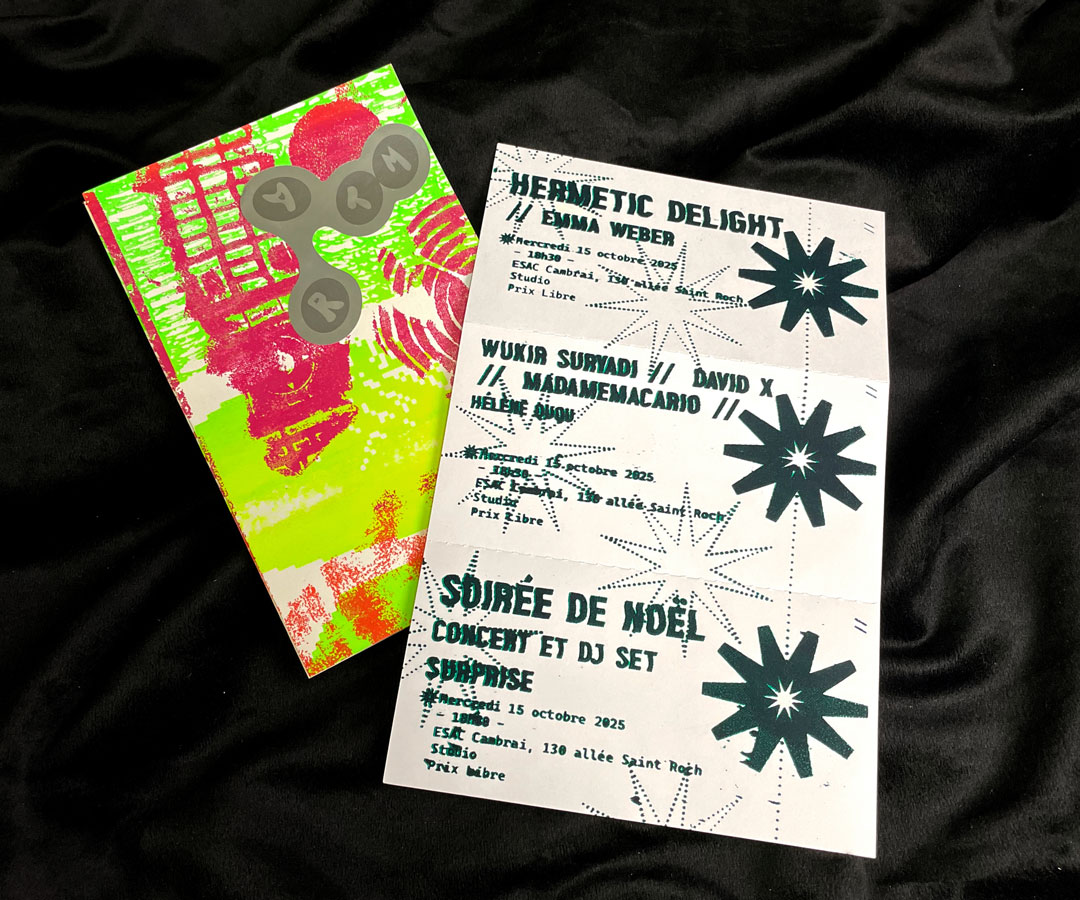
Each year, first-year Master's students at the School of Art and Communication organize concert evenings within the school.
The challenge is to collaboratively create the visual communication for these events by producing visual and written content, such as posters, flyers, and web-based stickers for printing.
By participating in this project, we actively contribute to the school's cultural life and showcase the artistic talents of our fellow students to the public. It's an enriching experience that combines academic learning
with practical engagement.
In their third year of undergraduate studies, students at the Cambrai School of Art and Communication are required to complete
a research project related to the writing of a thesis, which they will defend as part of their final degree.
For my part, I explored the
representation of ghosts through the medium of photography.
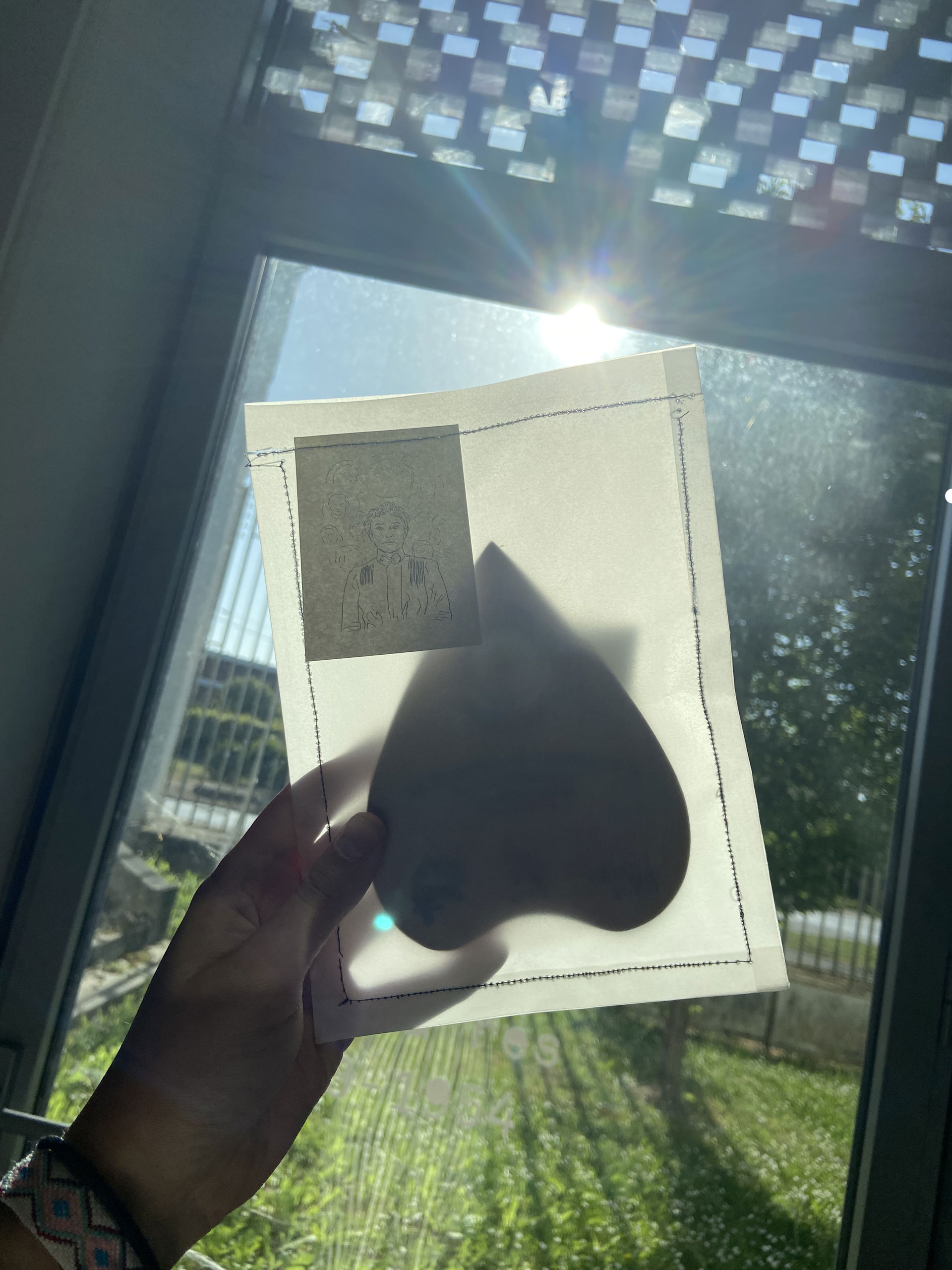
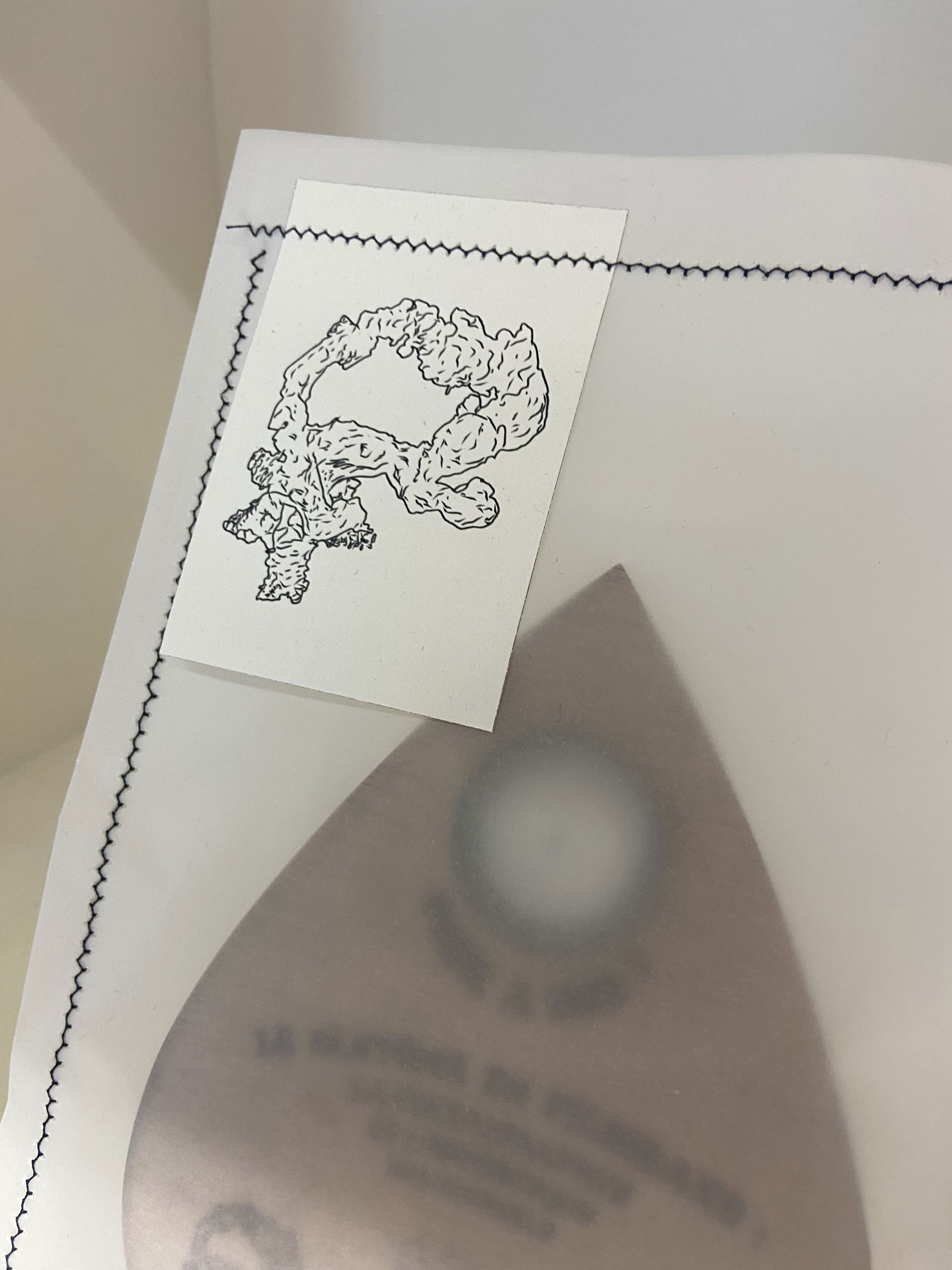
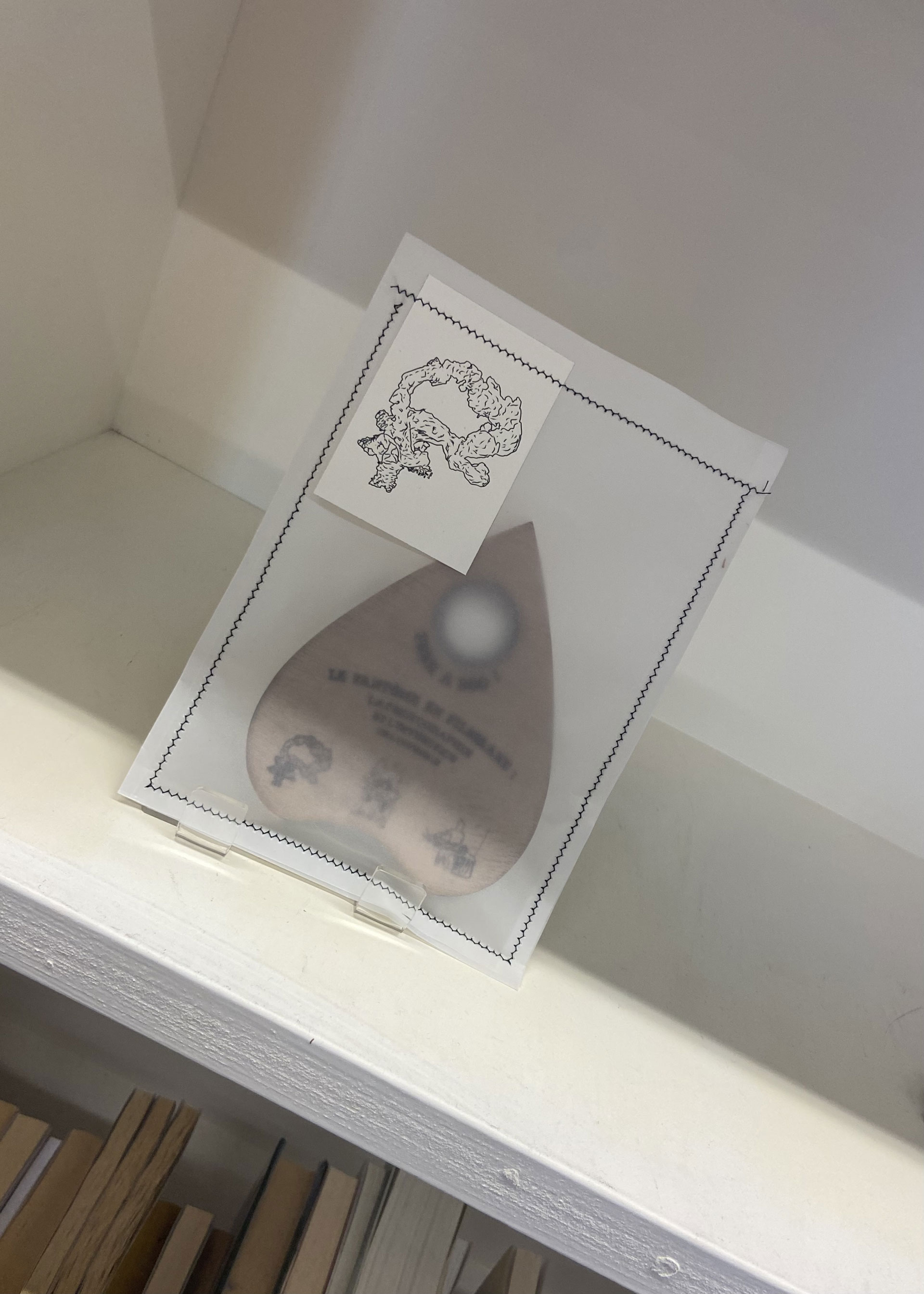
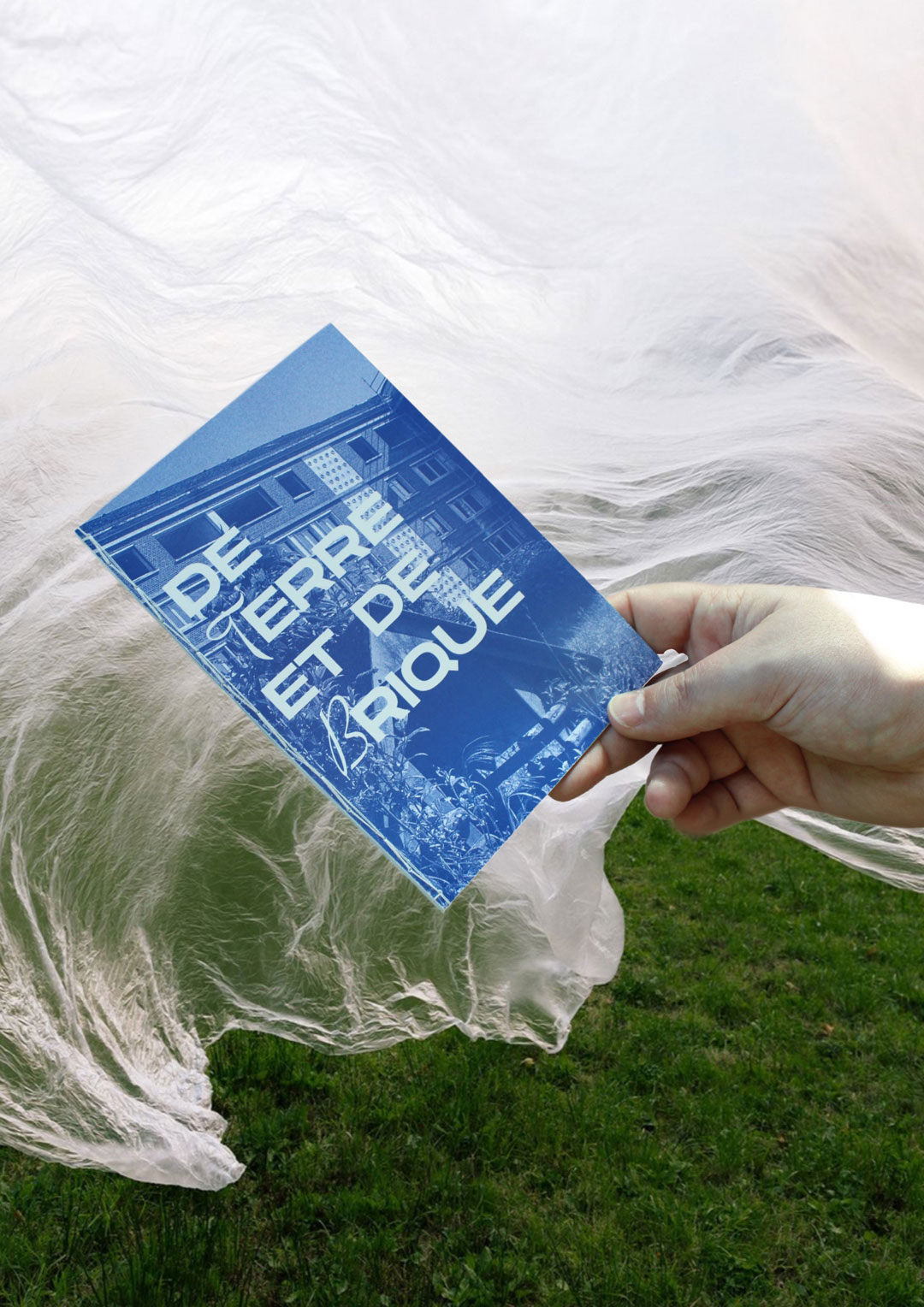
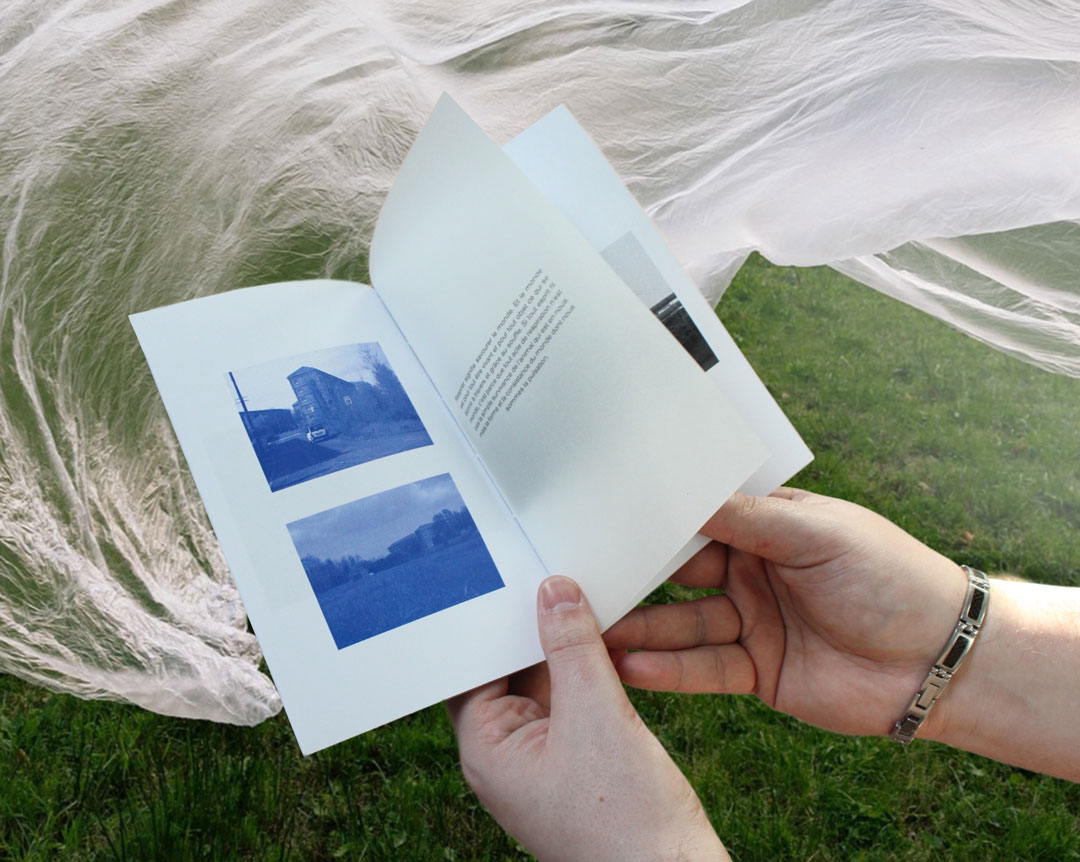
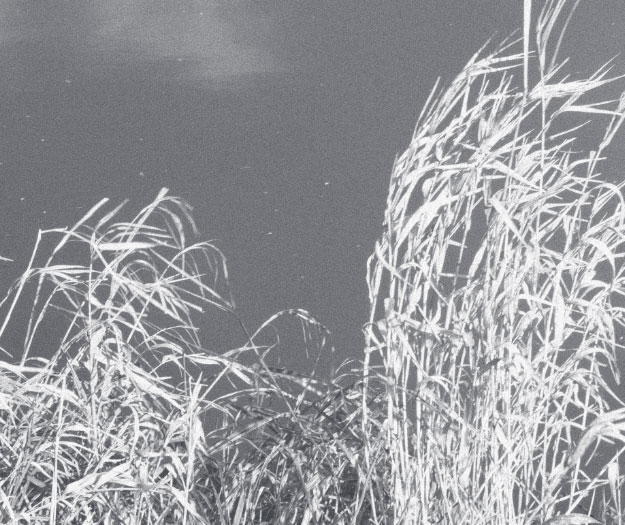
Of Earth and Brick is a project that explores the relationship between the outlying dwellings of the city of Cambrai and the surrounding nature.
In this project, I created a duotone edition, choosing to no longer process the photograph in a traditional way, but to work with the image in shades of gray.
This layering creates the illusion of a black and white image, similar to the others. On these tracing paper sheets, I added quotations from the Italian philosopher Emanuele Coccia, taken from his book The Life of Plants.
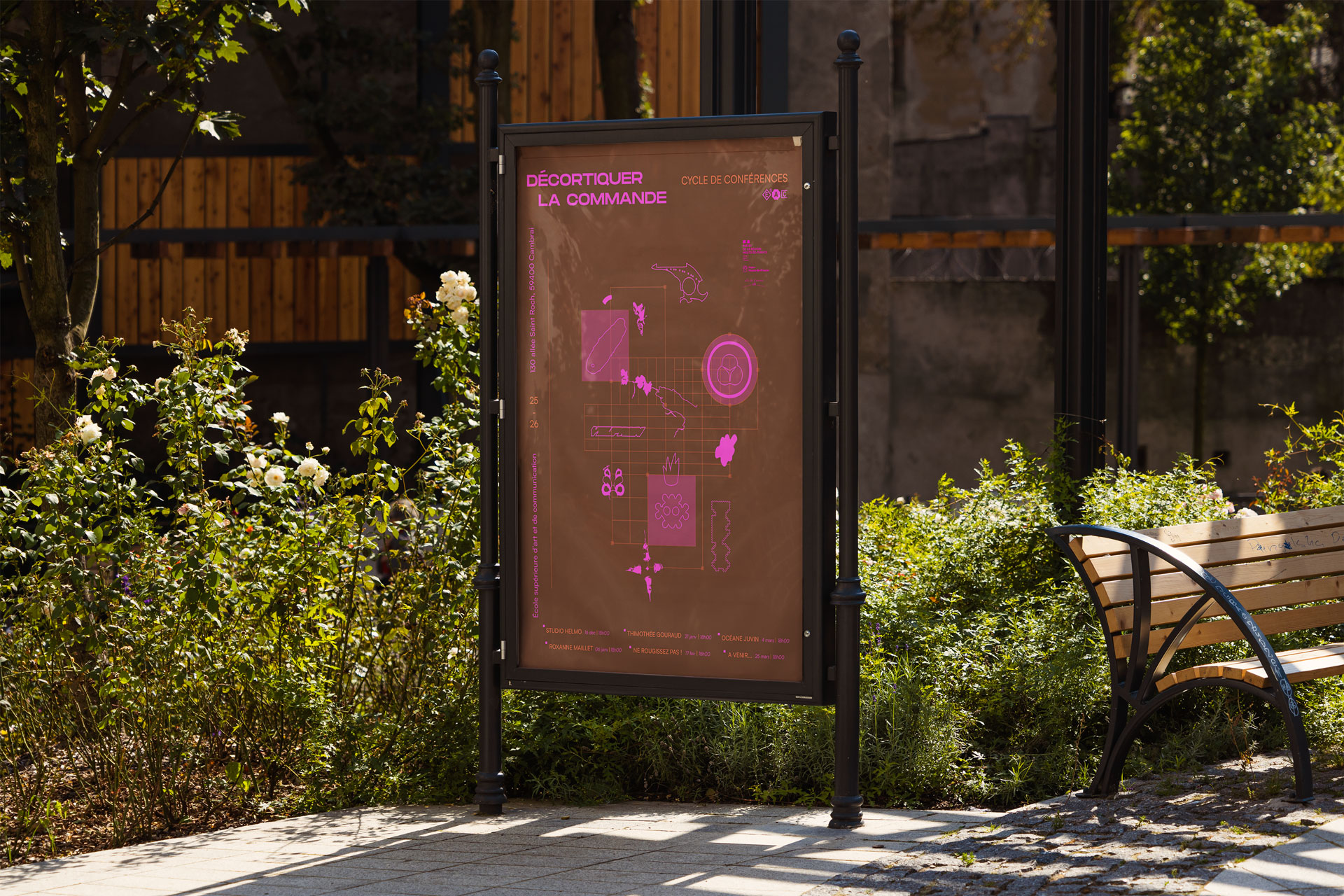
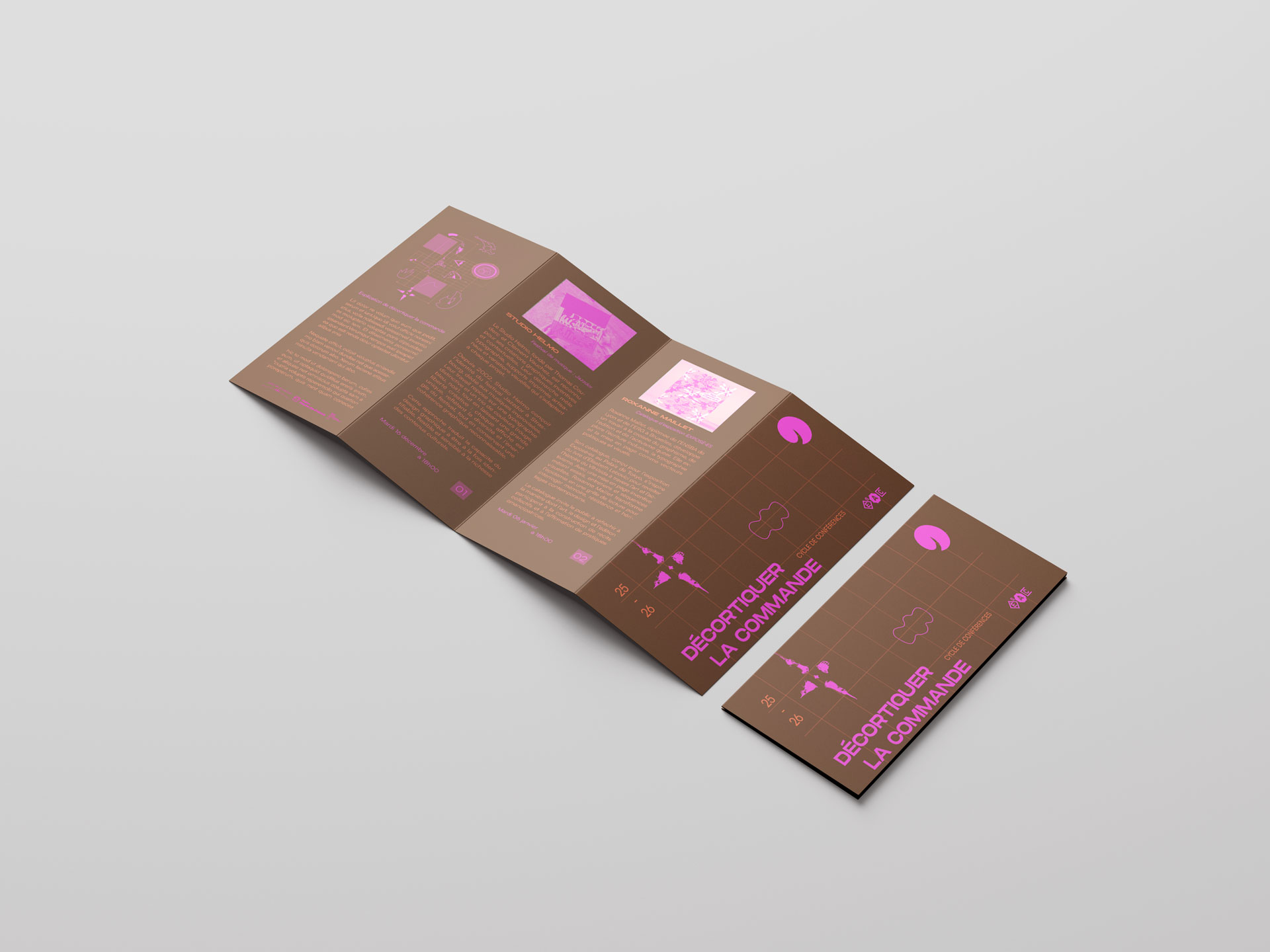
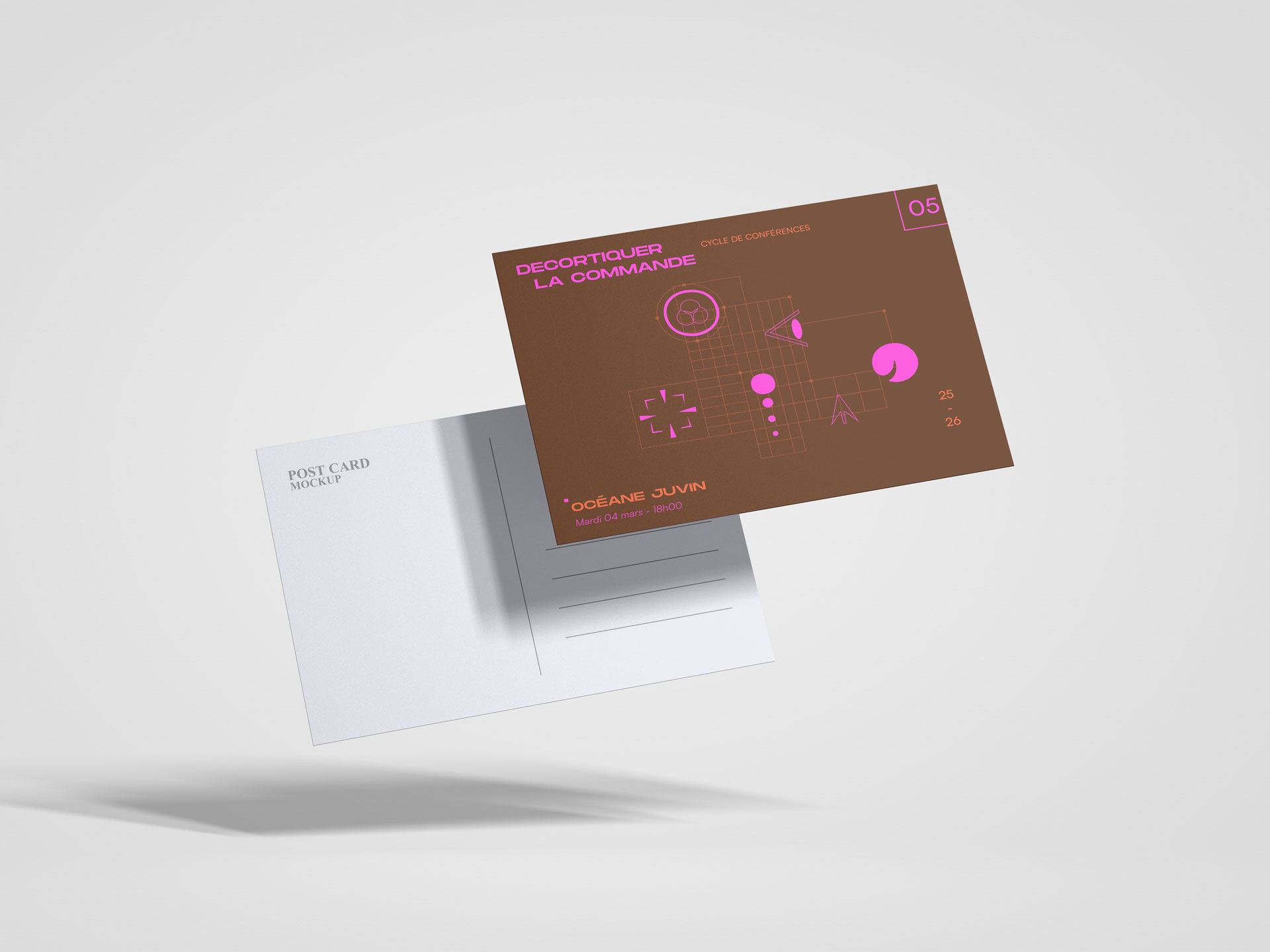
Poster for the 2023-2024 season of the "Deconstructing the Commission" lecture series at Ésac Cambrai, part of "Inventing One's Work," a project supported by the Ministry of Culture.
How do you label, standardize, and deconstruct a commission?
The forms featured on the poster were gleaned from the projects of each of the invited (and non-invited) participants. In total, 16 forms for 16 lectures. Even though ten of them were not selected, they literally form the foundation of the poster, presenting the final choice, the avenues explored, the changes in direction, and the rejected proposals.
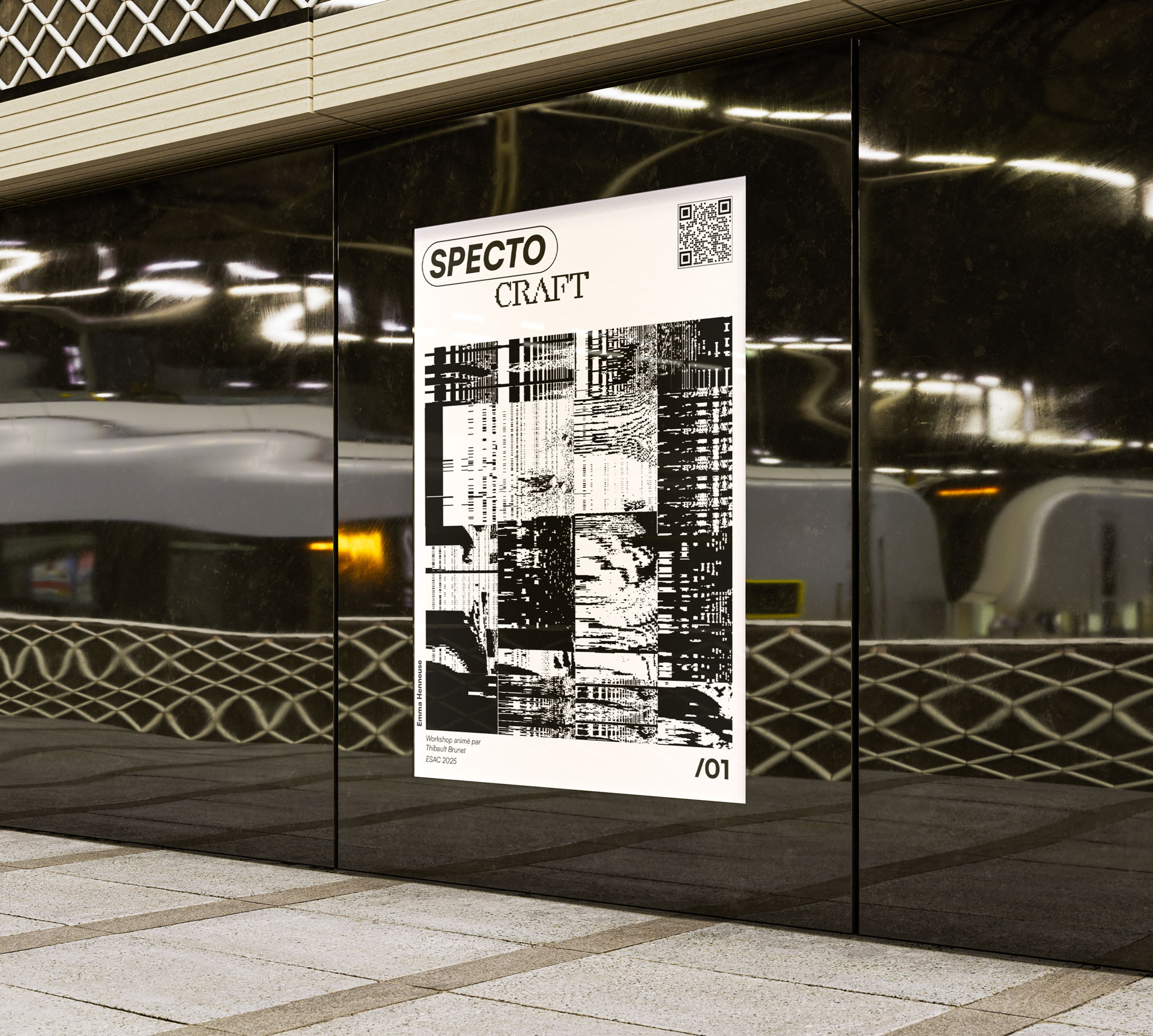
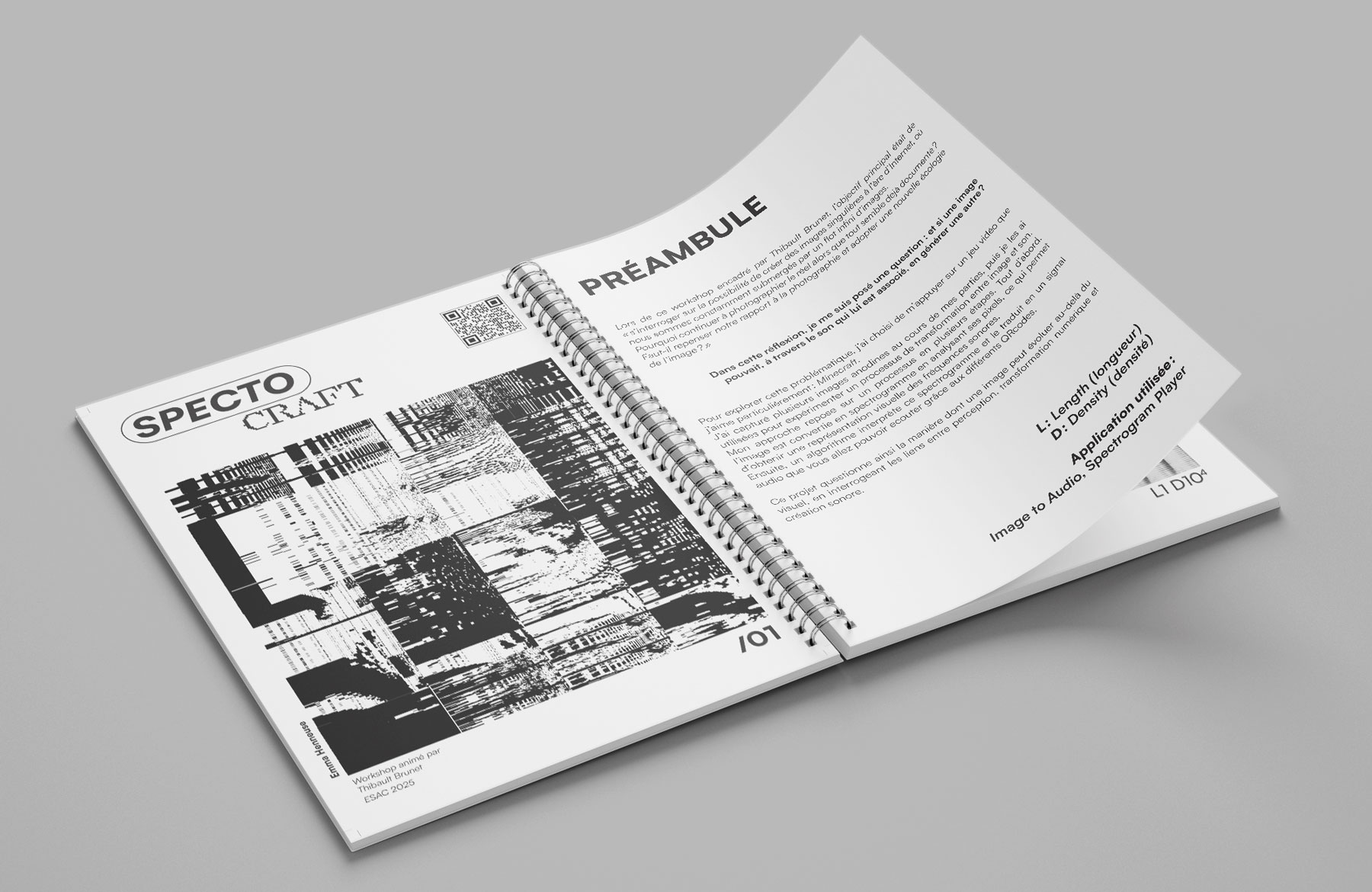
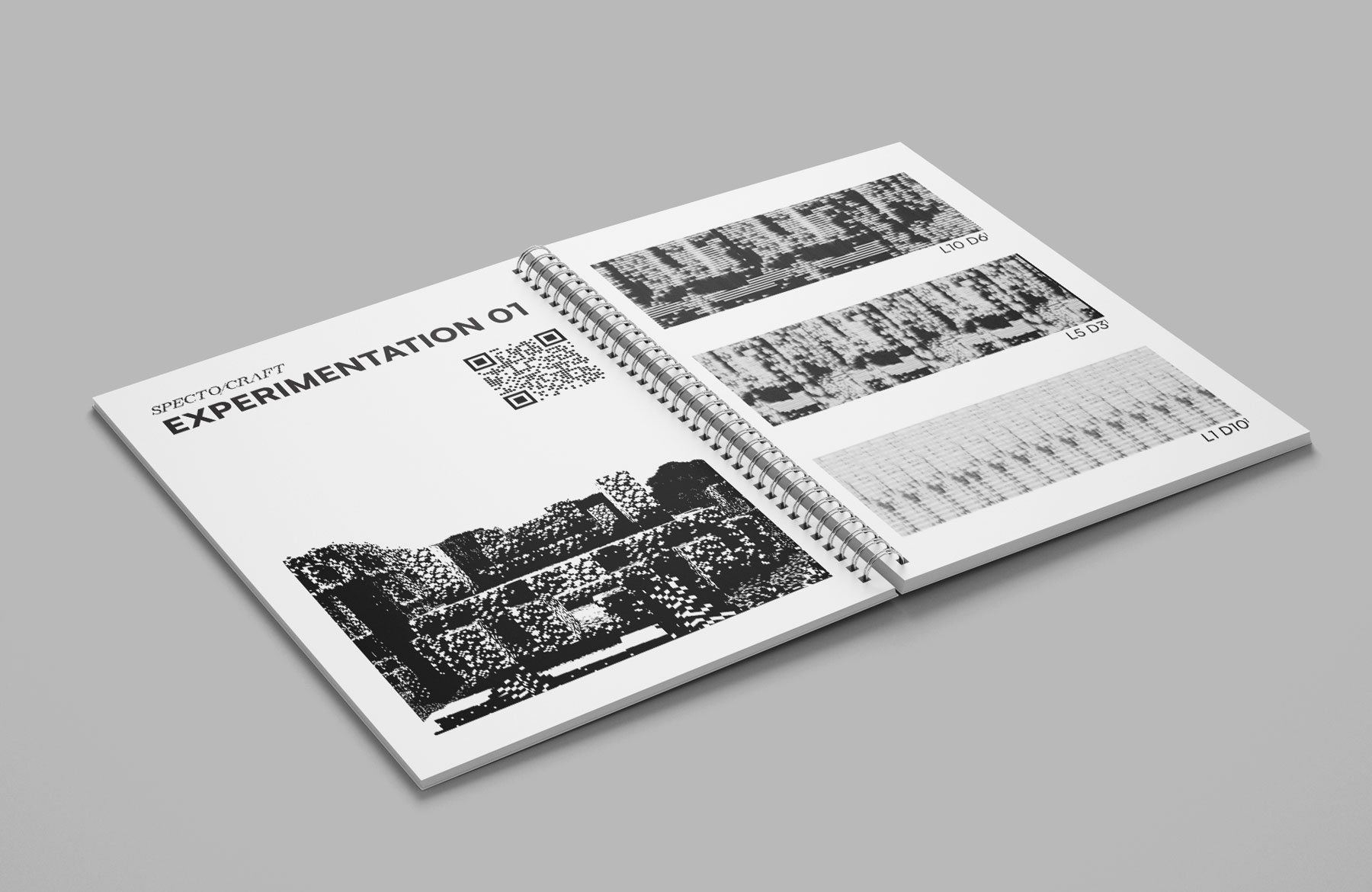
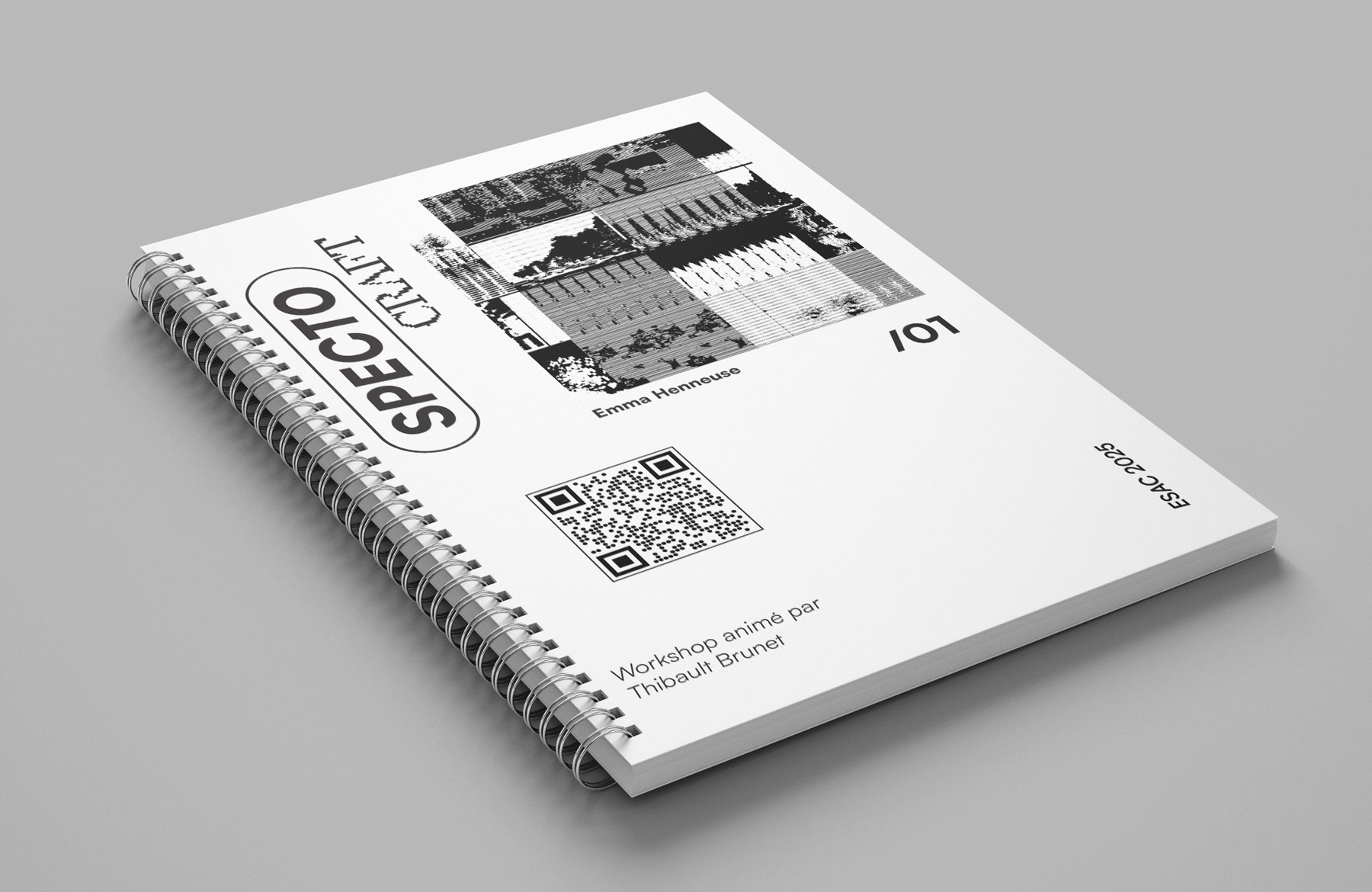
During a workshop led by Thibault Brunet,
the main objective was to "explore the possibility of creating unique images in the internet age, where we are constantly overwhelmed by an endless stream of images.
Why continue to photograph reality when everything seems already documented? Should we rethink our relationship with photography and adopt a new ecology of the image?
In this reflection, I asked myself another question: What if an image could, through its associated sound, generate another image? To explore this issue, I chose to use a video game I particularly enjoy: Minecraft.
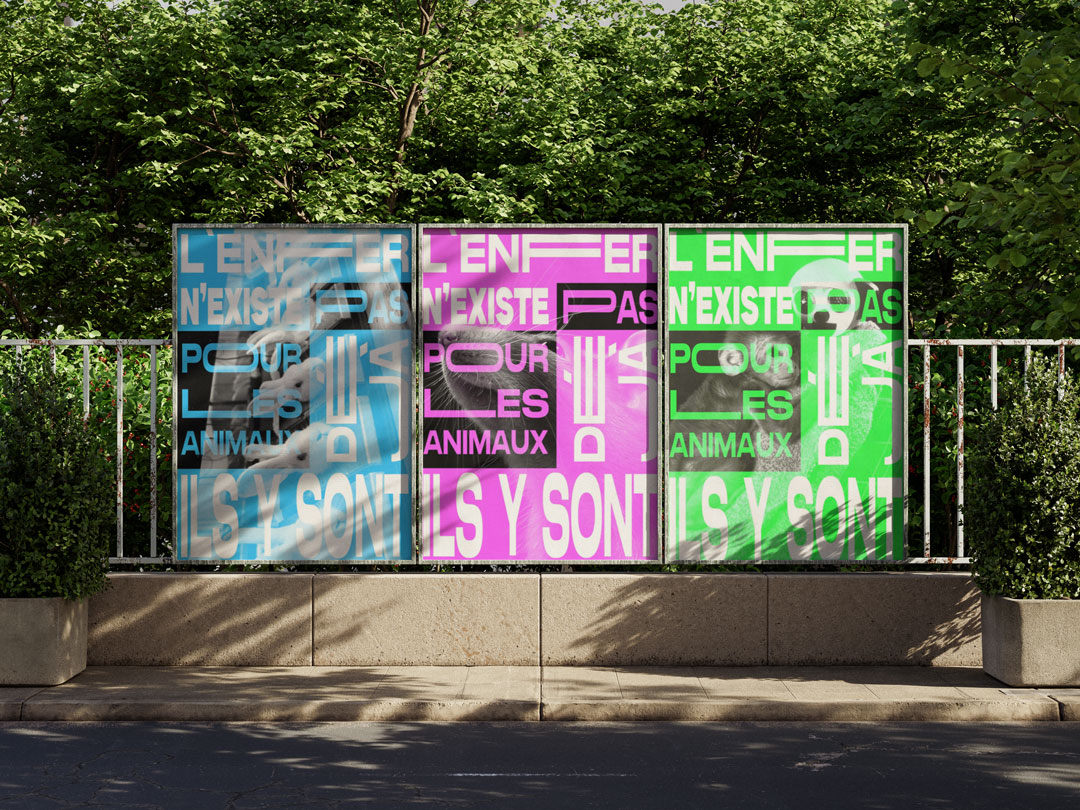
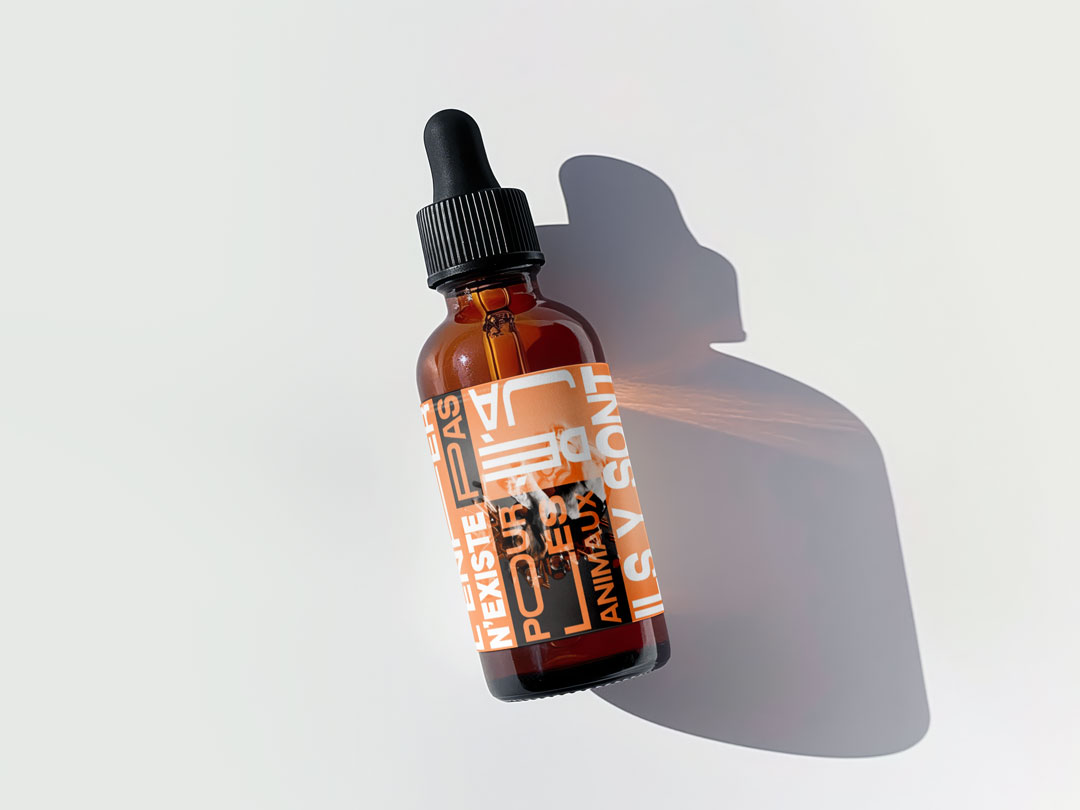
In this project, I chose to work on the
response against animal exploitation in
laboratories, drawing on Albert Einstein's powerful quote:
“Hell does not exist for animals; they are already there.”
This quote highlights the atrocious reality
of the suffering inflicted on animals in
scientific experiments.
The poster I created features four
animals typical of these practices: the beagle,
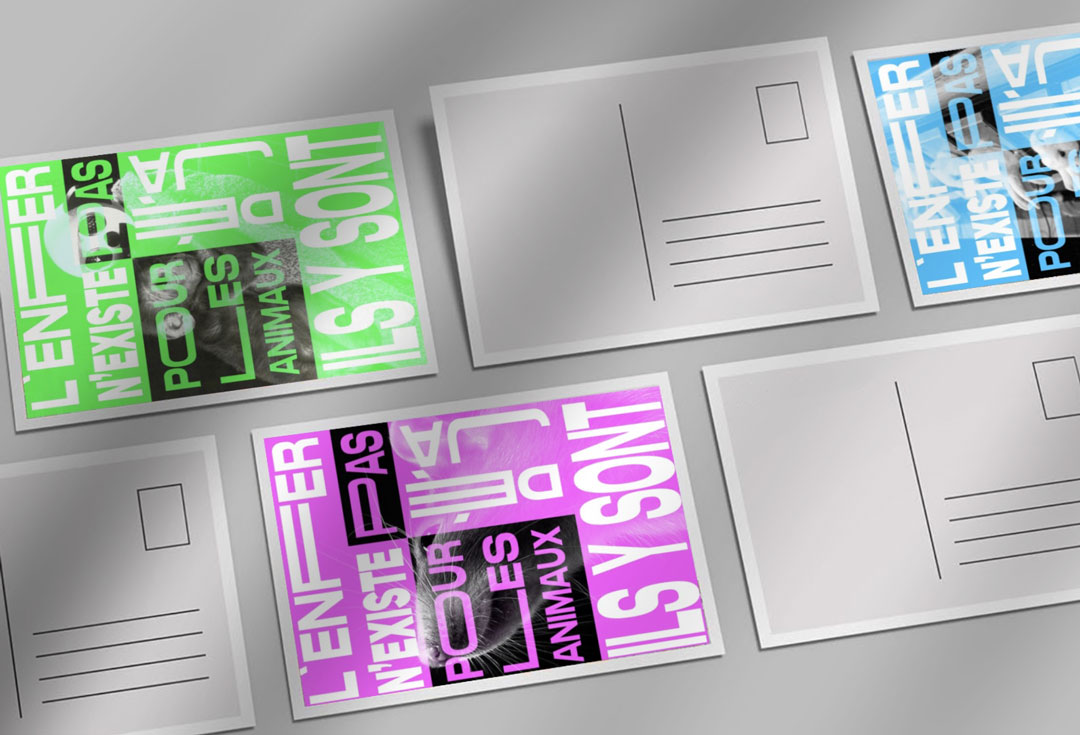
the rat, the monkey, and the rabbit, in order to raise public awareness of their plight. My approach allows for
the adaptation of this image into postcards,
but also into vegan cosmetic products,
thus creating a bridge between art, activism, and ethical consumption.
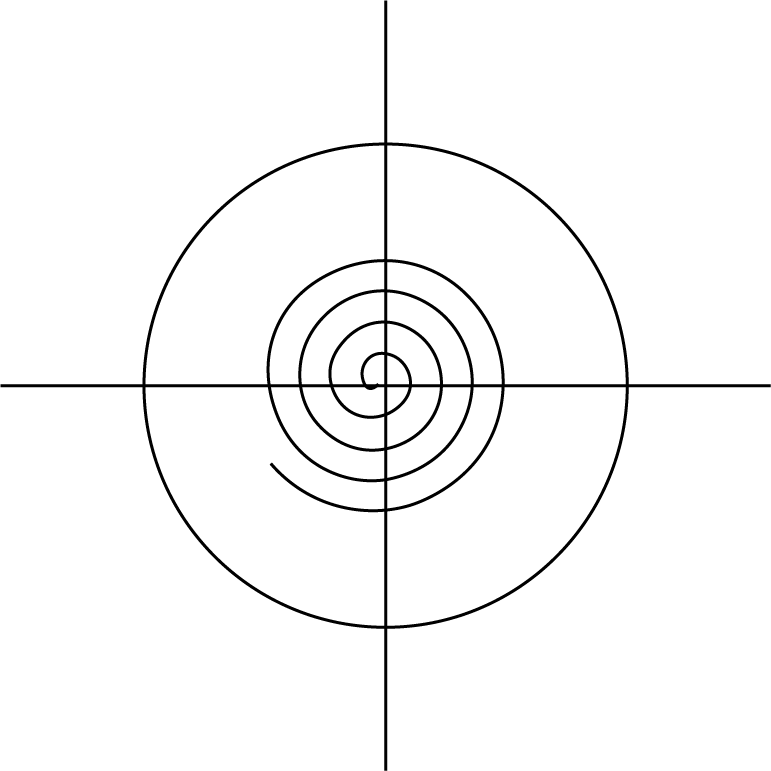
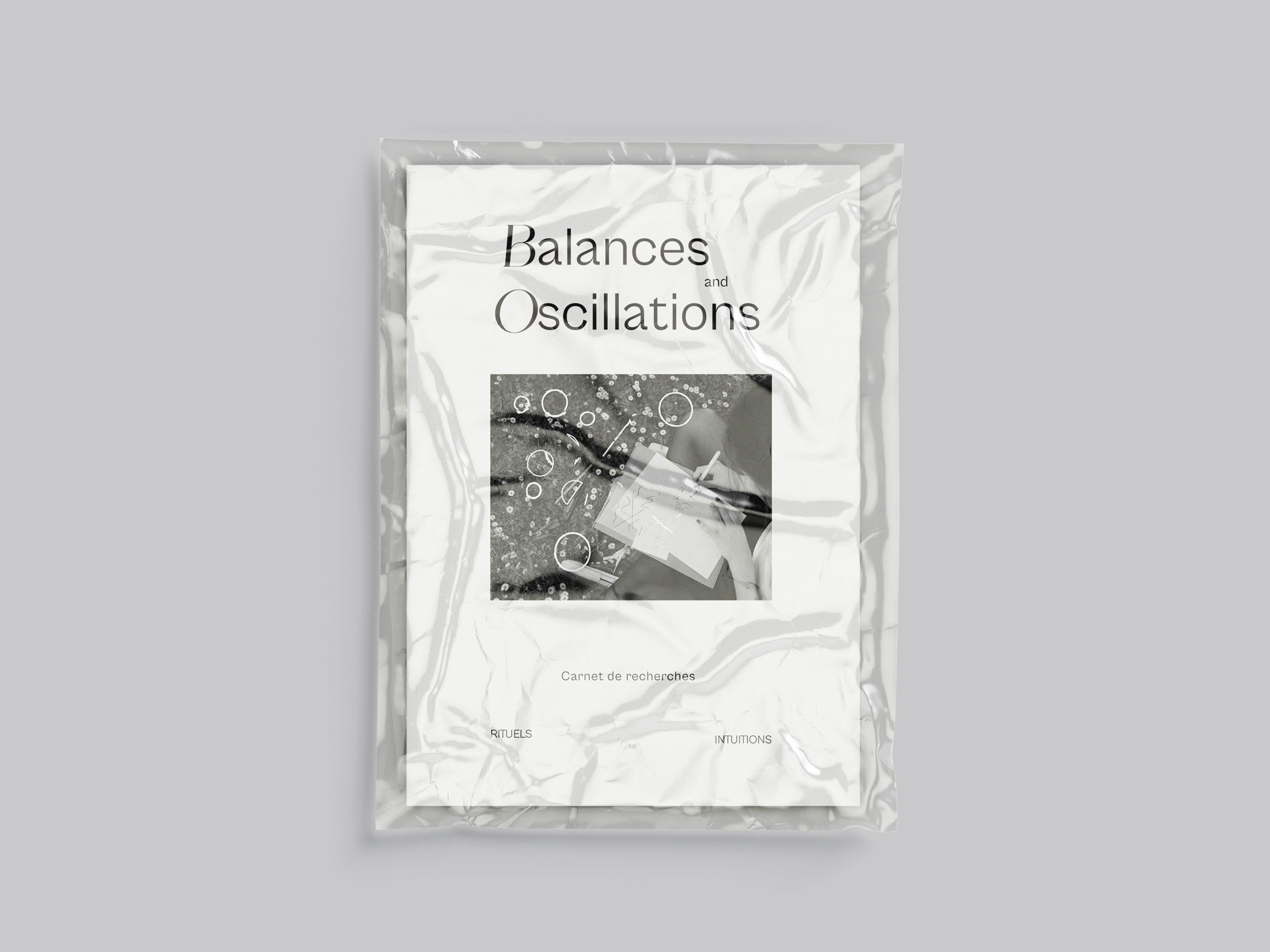
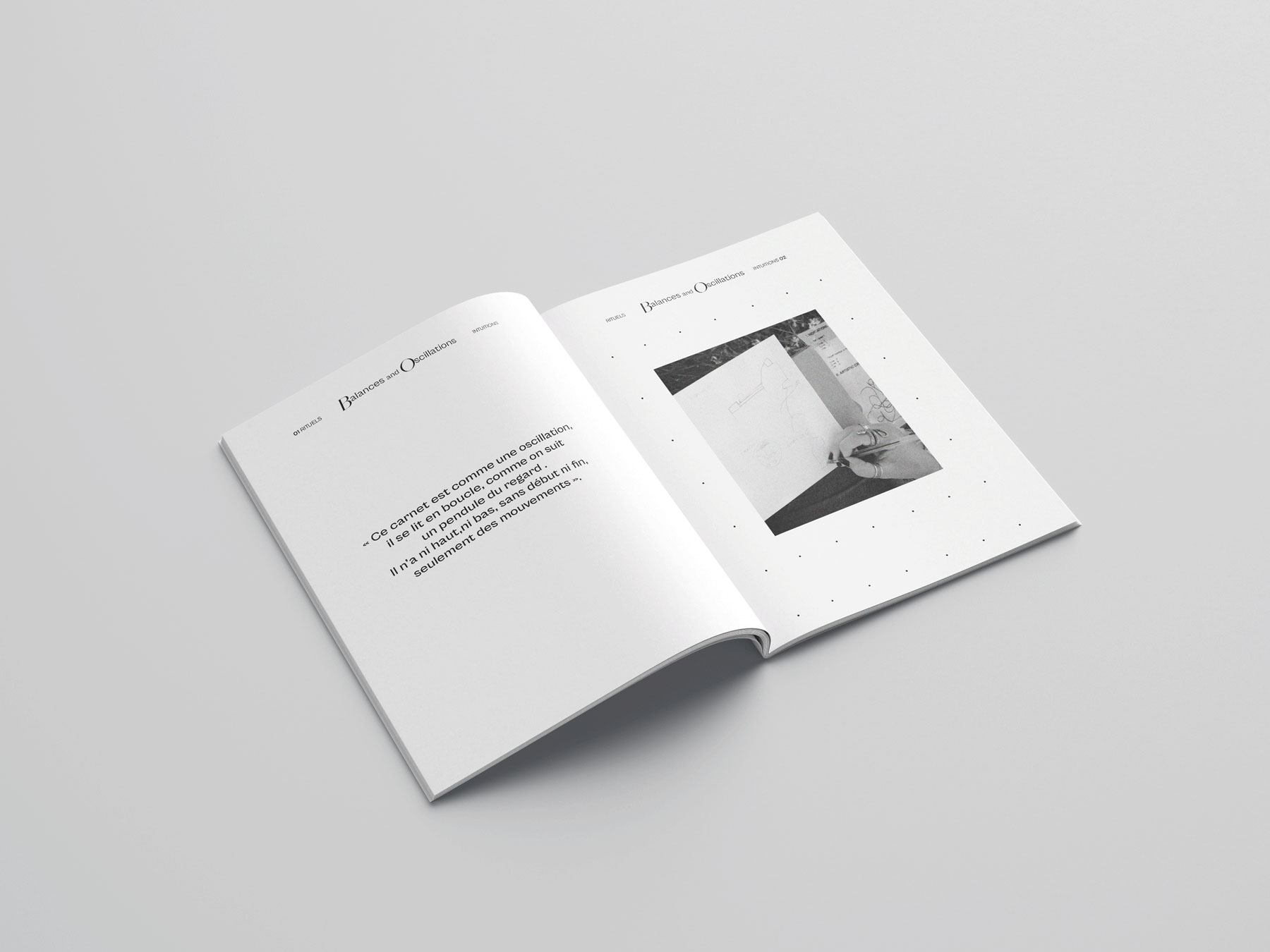
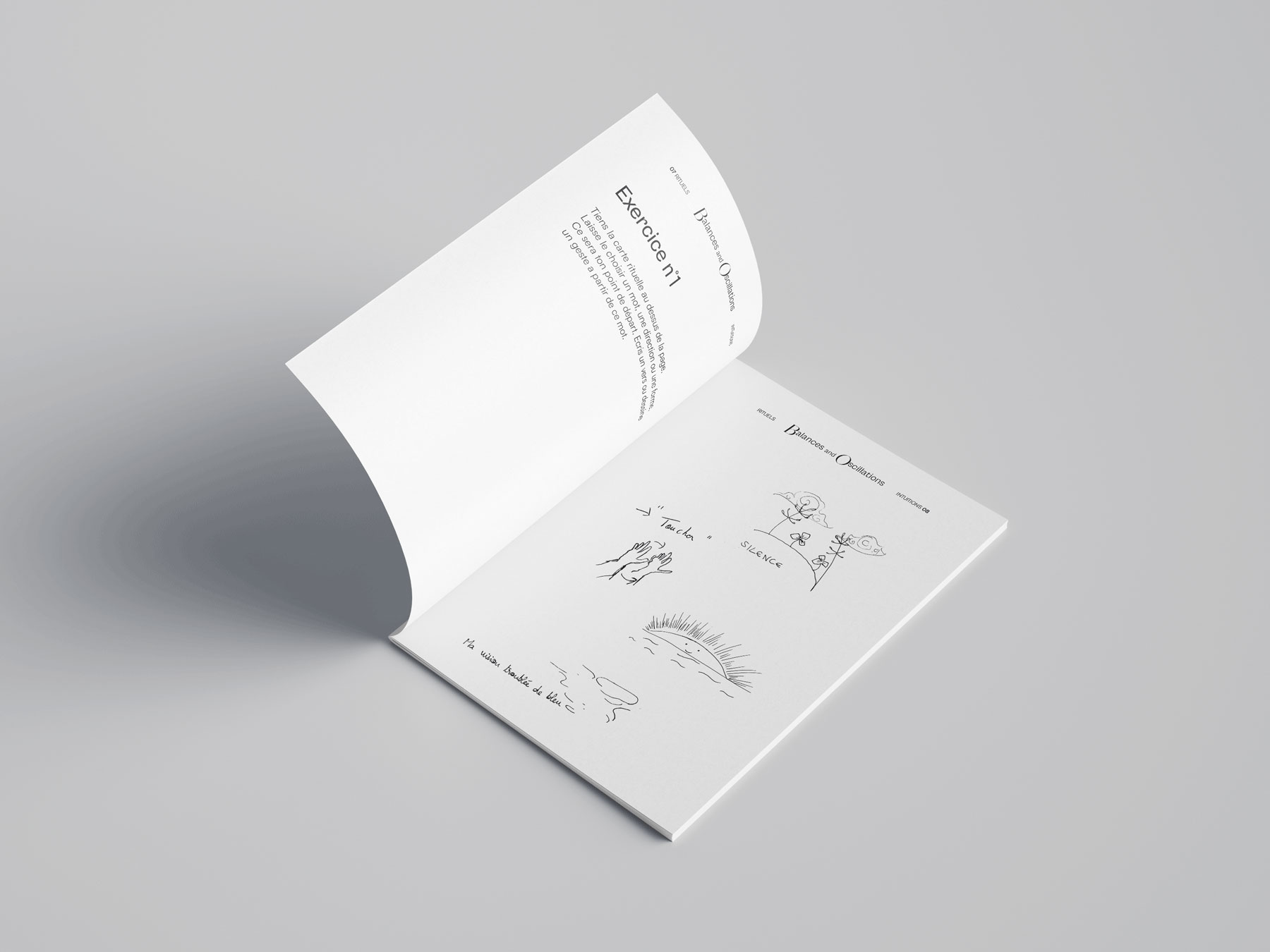
The starting point is based on a unique practice:
the use of a pendulum as a guidance tool.
It introduced a directed randomness and a dialogue with the invisible—for example, to determine the number of circles or the shapes to explore. This protocol led me to
blend sketches, poems, and symbols, in
an attempt to connect different mediums, between
the visible and the intuitive.
In this same vein, I wanted to share the experience on a small scale
with close friends. I suggested simple exercises to them
to activate a more intuitive and sensitive listening. The traces of these
collective moments are gathered in this edition, conceived
as a poetic and visual rendering of these exchanges.
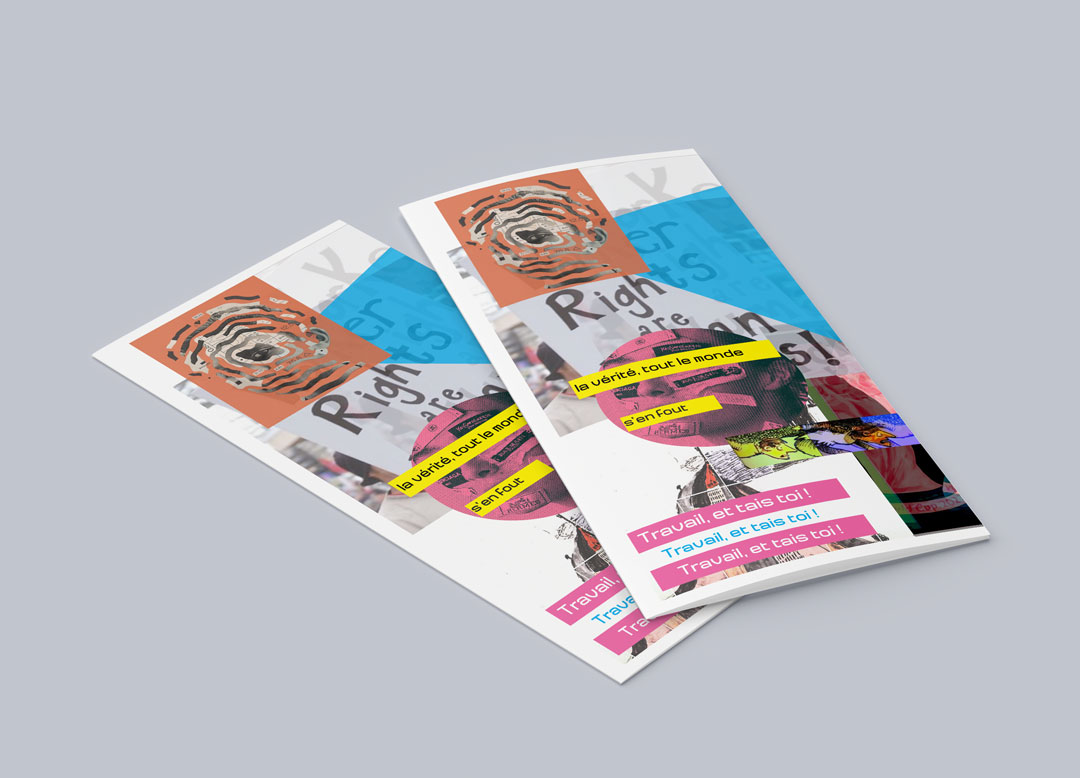
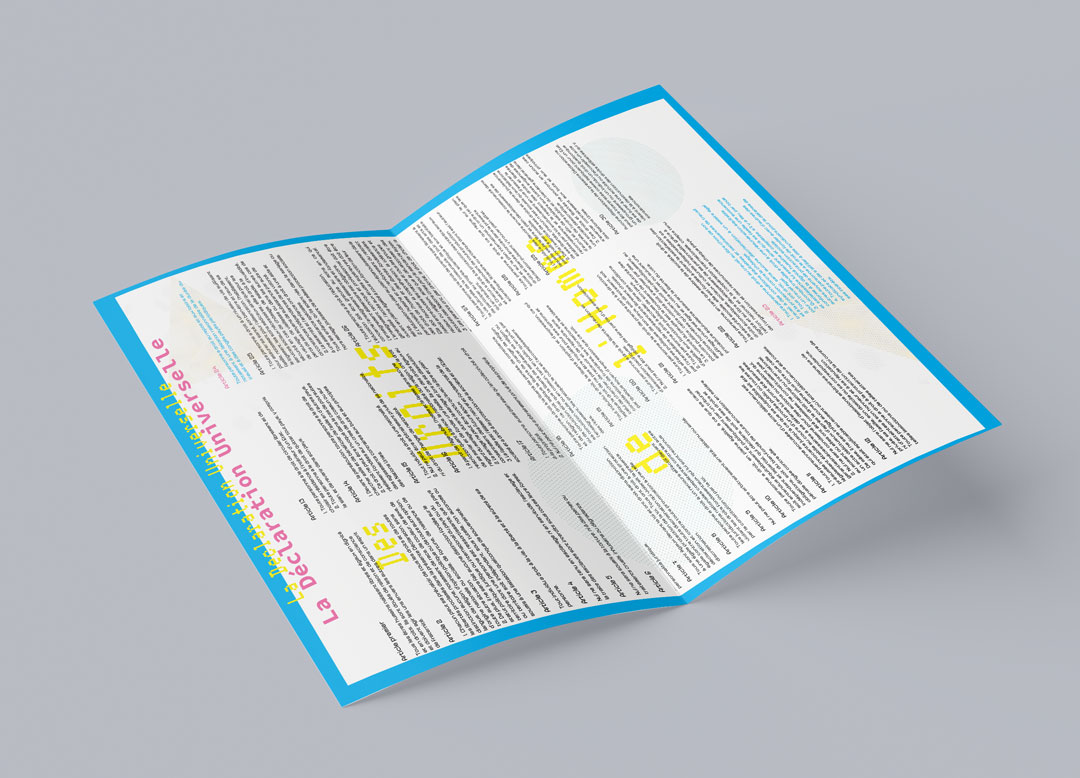
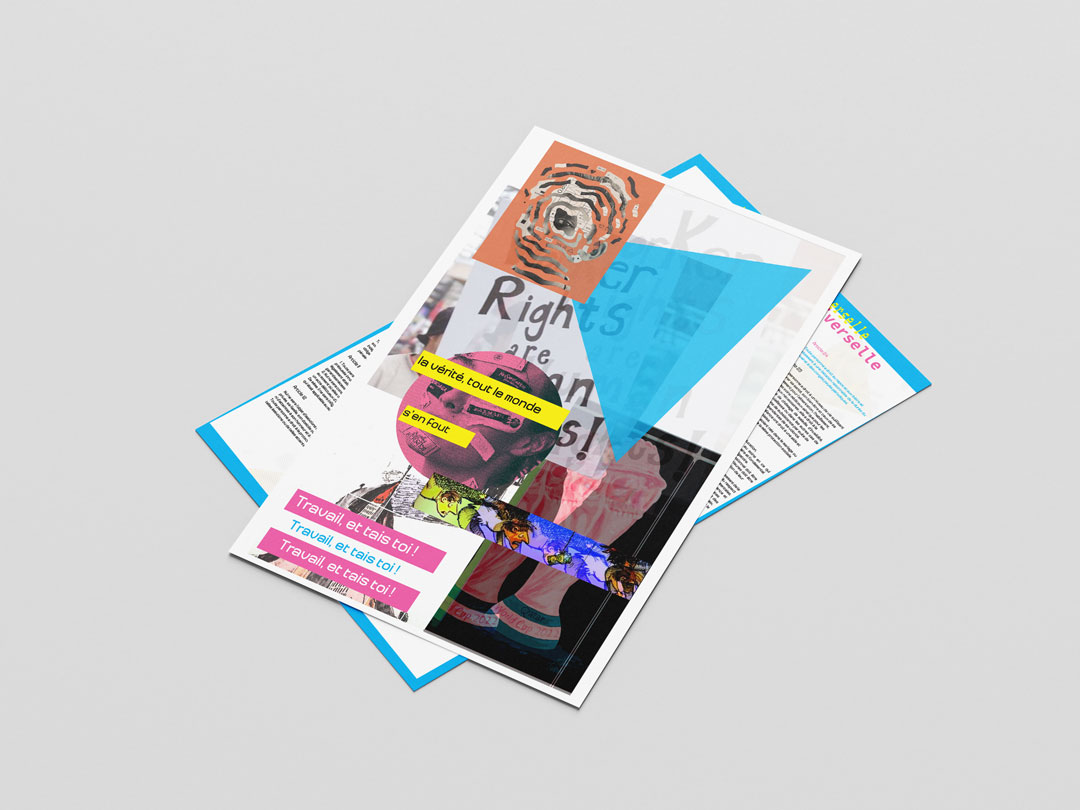
As part of the 75th anniversary of the Universal Declaration of Human Rights, this project aimed to pay tribute to this declaration in the form of a poster. I chose to specifically illustrate Articles 23 and 24, which address workers' rights and the exploitation of employees.
This is unfortunately still a relevant topic, particularly concerning the exploitation of children in some foreign countries, but also in Europe.
Similarly, the exploitation of workers was at the heart of the controversy surrounding the construction of stadiums for the 2022 World Cup in Qatar.
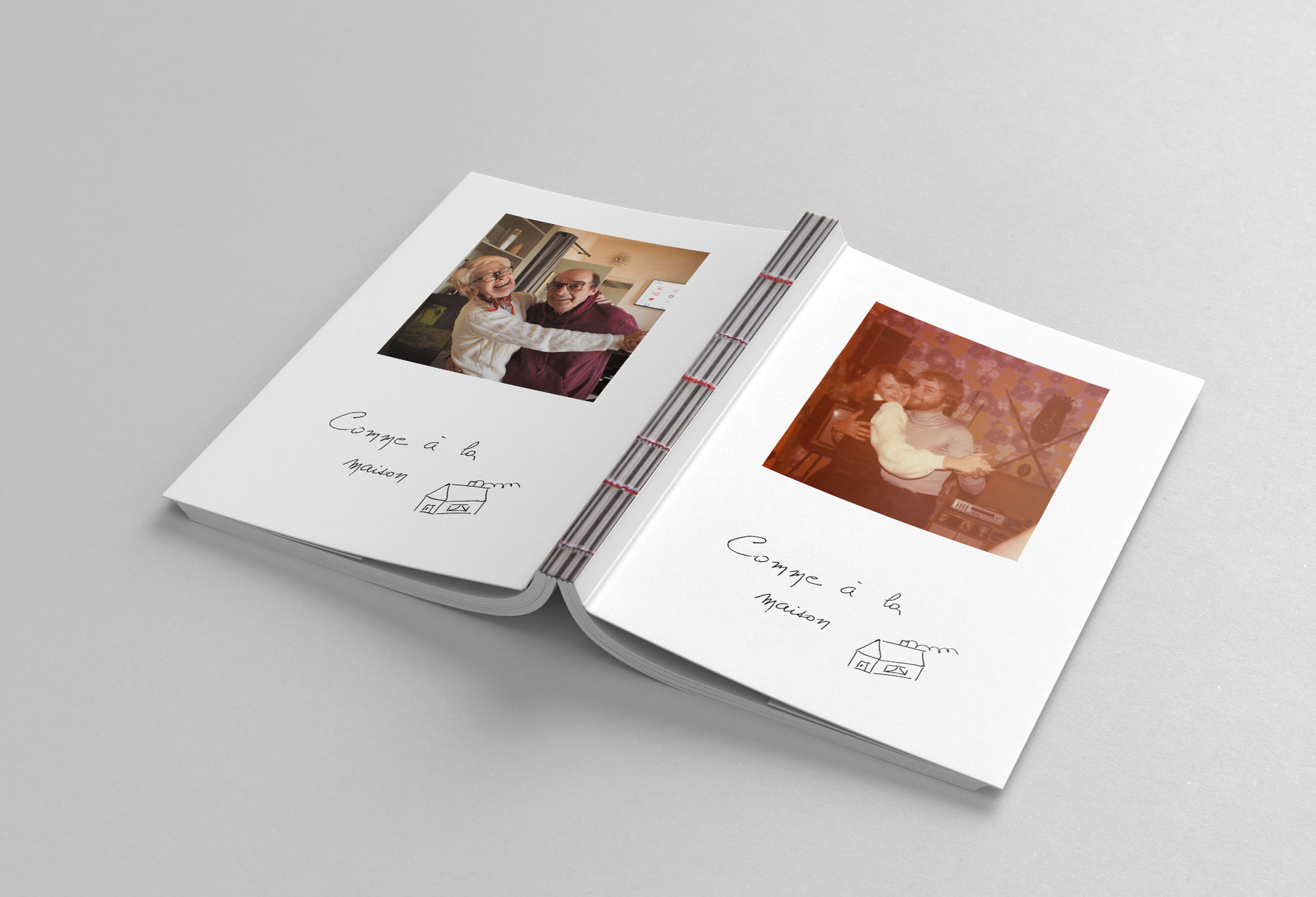
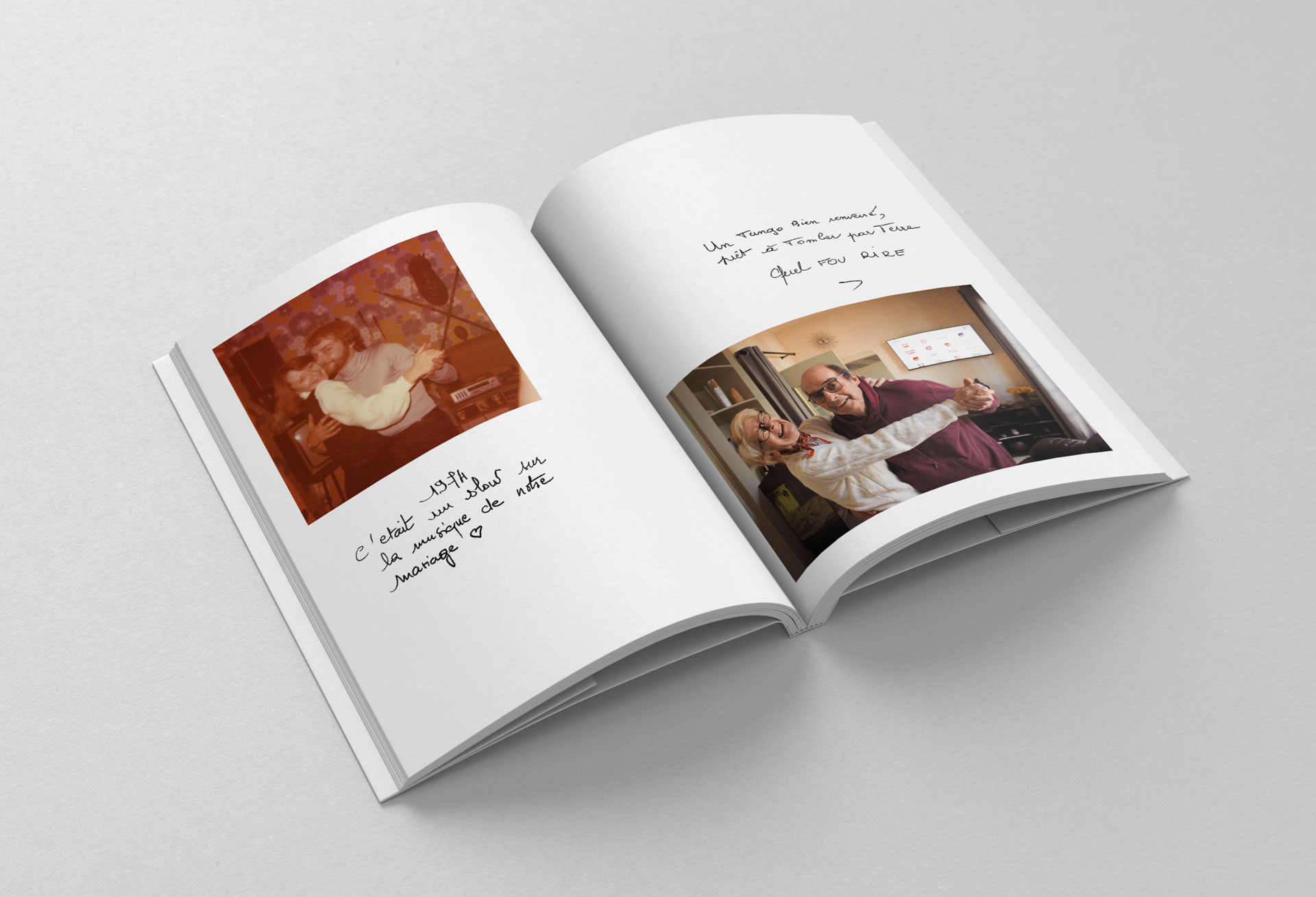
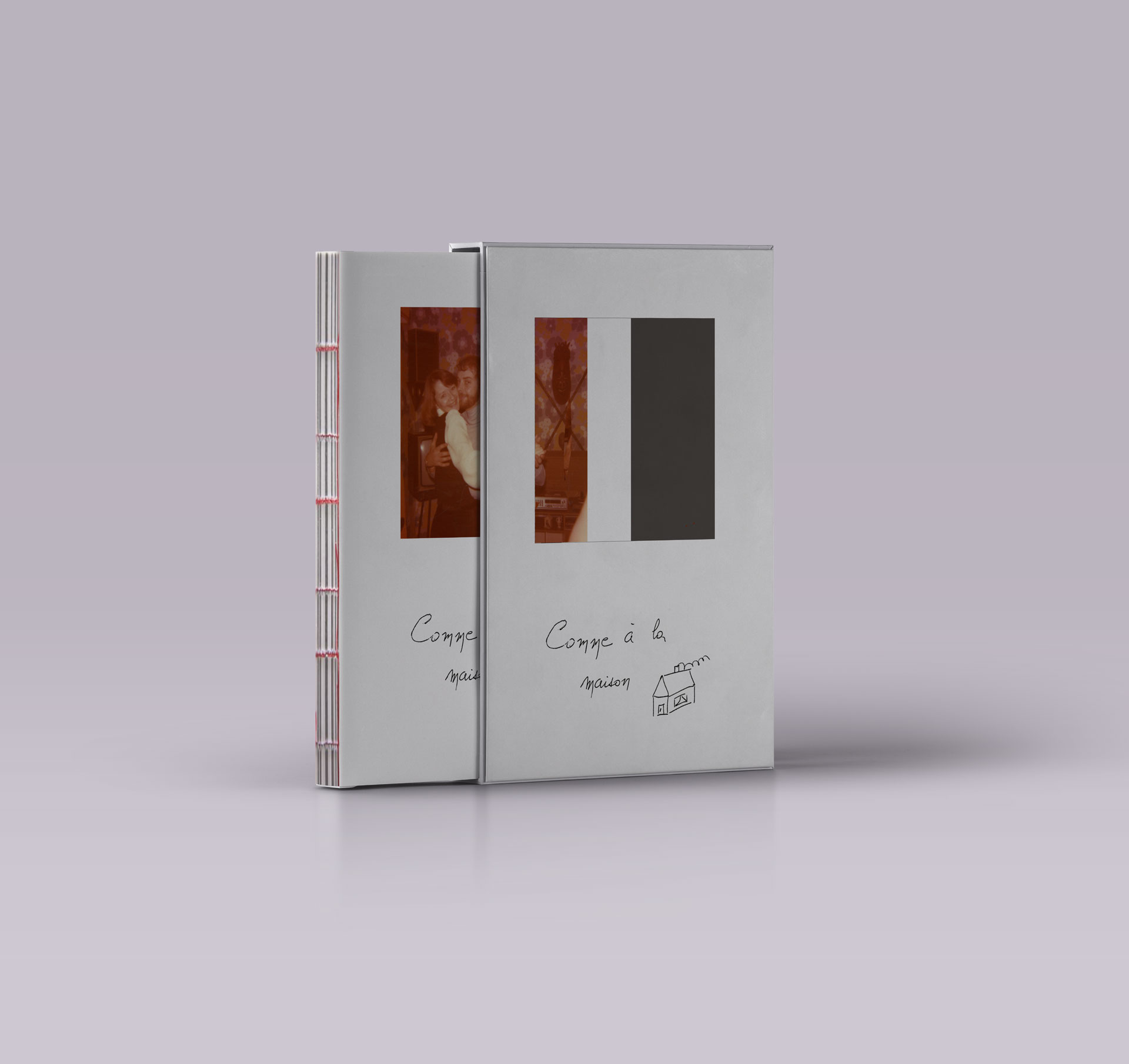
This edition echoes my "My Grandparents Are Laughing" project, in which I wanted to create a portrait of my grandparents.
From their childhood to the moment we met, this edition traces their life journey and highlights the very strong bond I share with them.
To achieve this, I wanted to include anecdotes and handwritten notes that weave together the story of their lives.
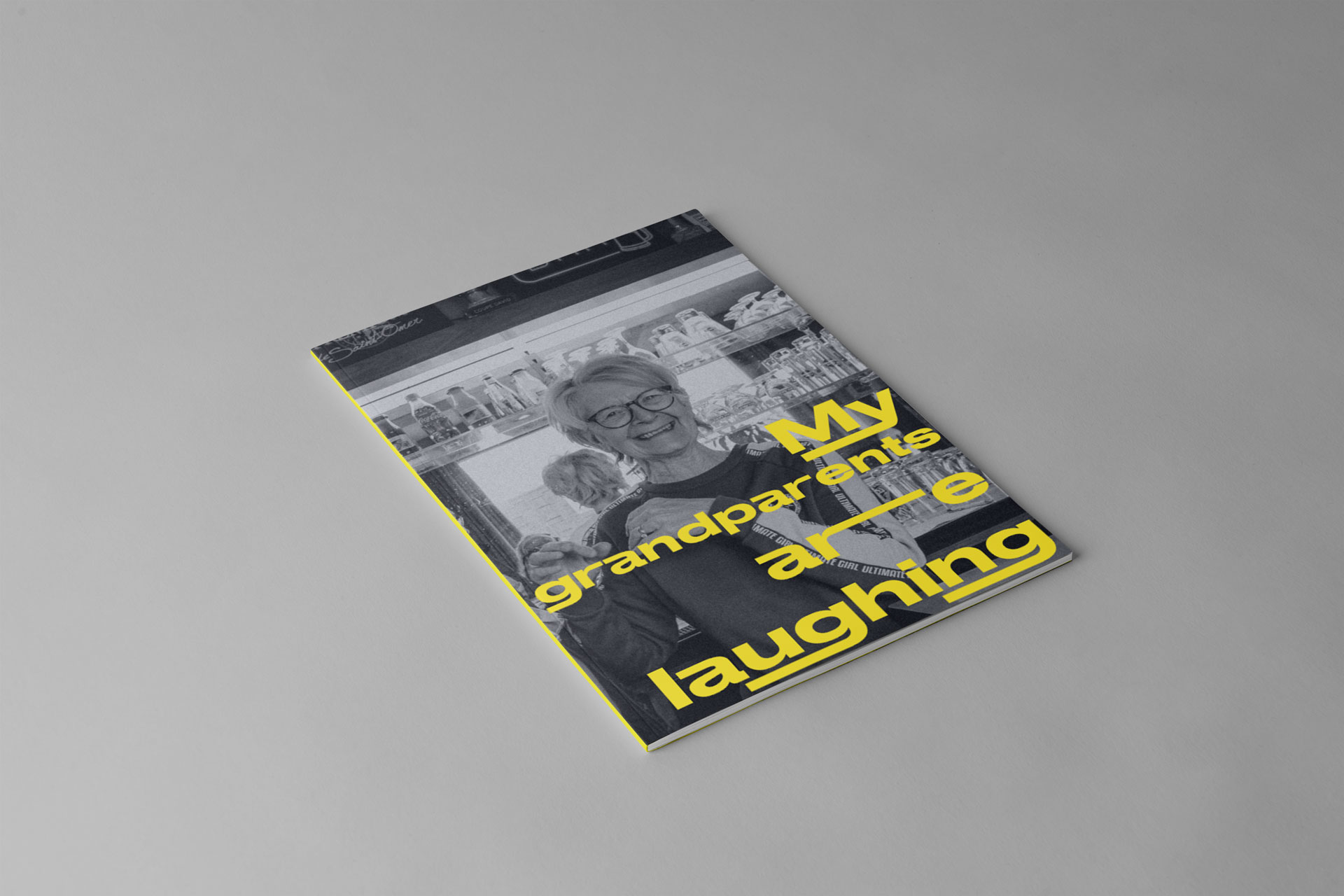
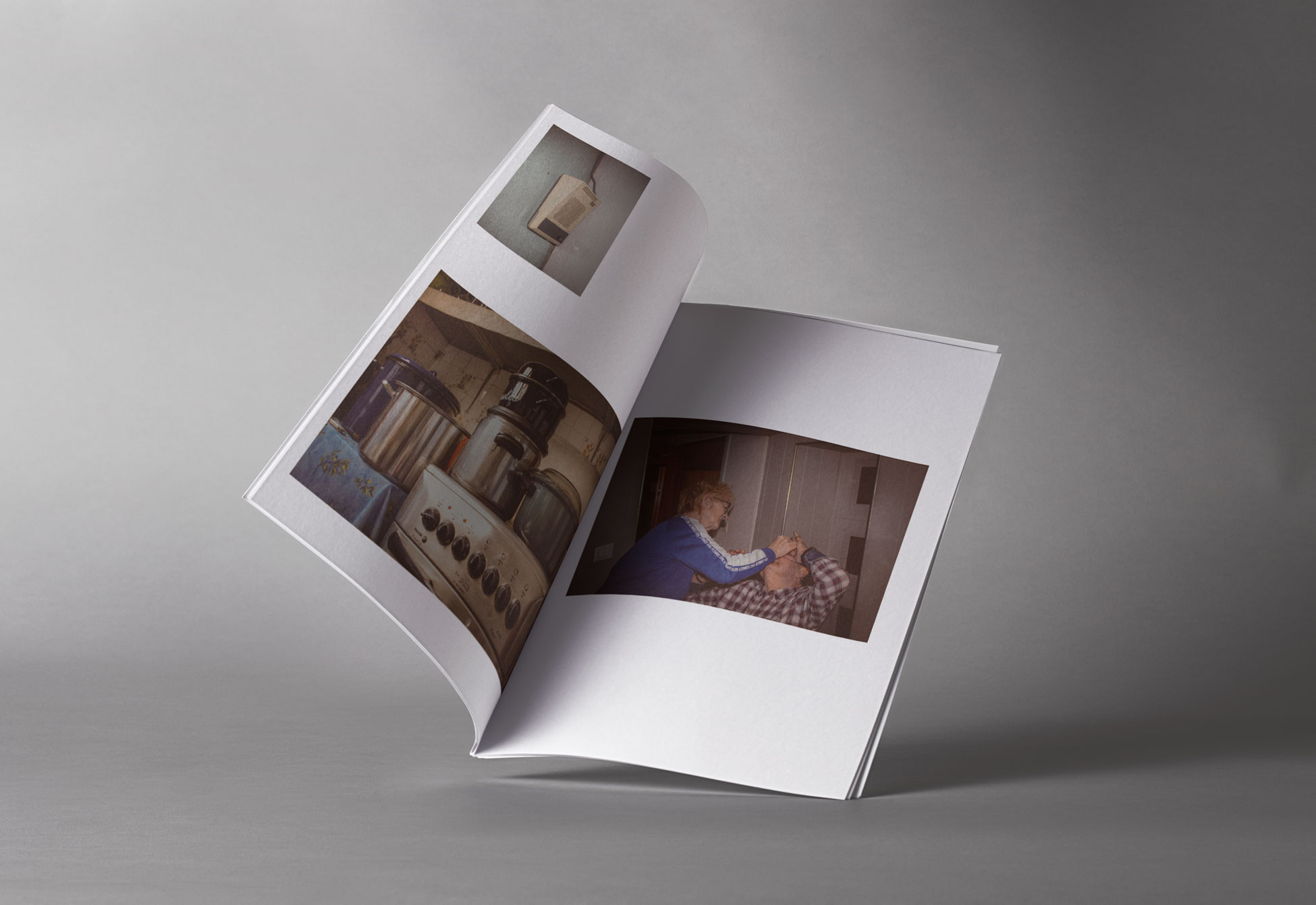
For a portrait project, I chose to
create a portrait of my grandparents through a
publication entitled My Grandparents Are Laughing.
This title is a reference to Richard Billingham's Ray's a Laugh, a series that inspired me with its simplicity and
its candid photographs, showing
authentic moments of life.
My goal was
not only to present a portrait of my grandparents,
but also to immerse you in their daily lives.
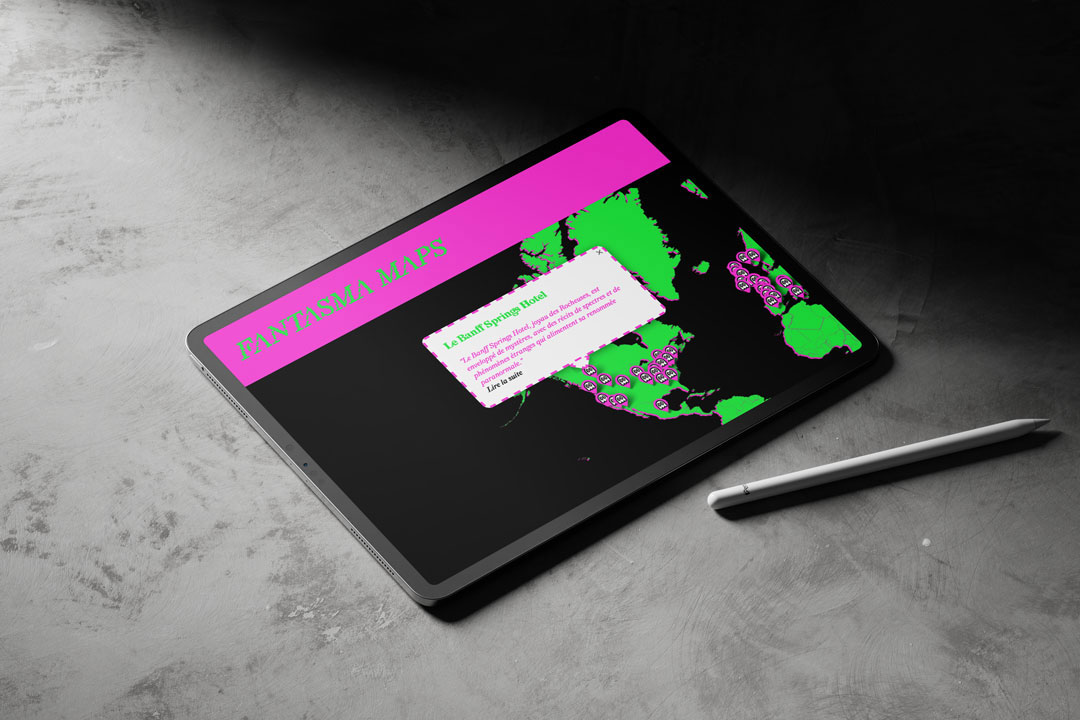
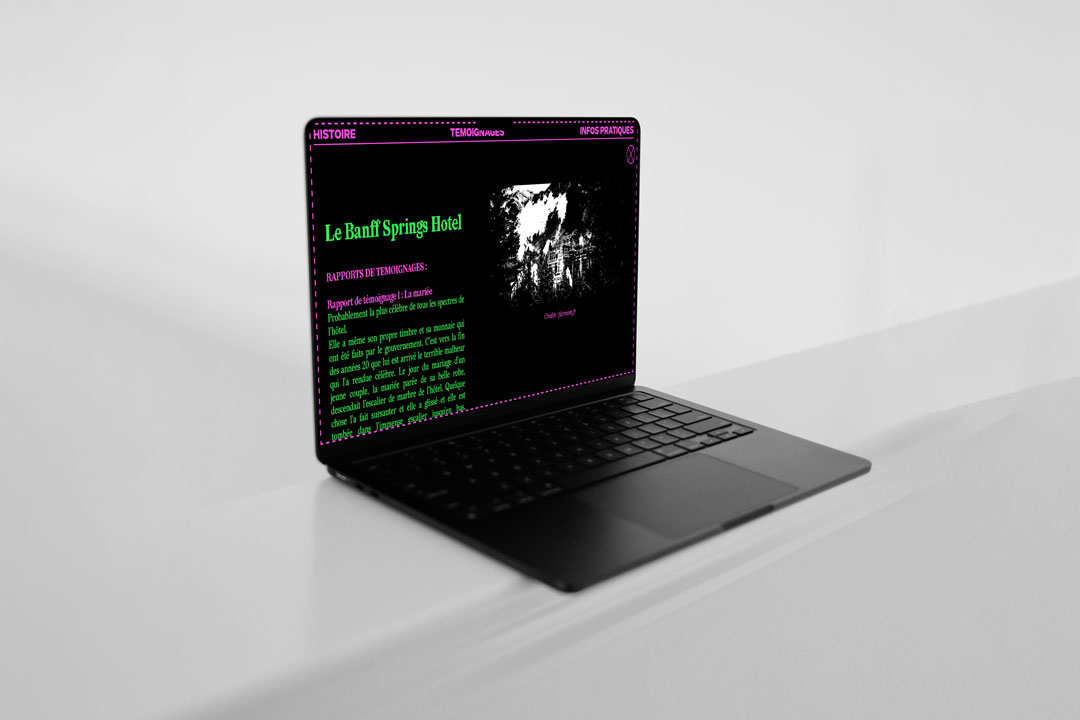
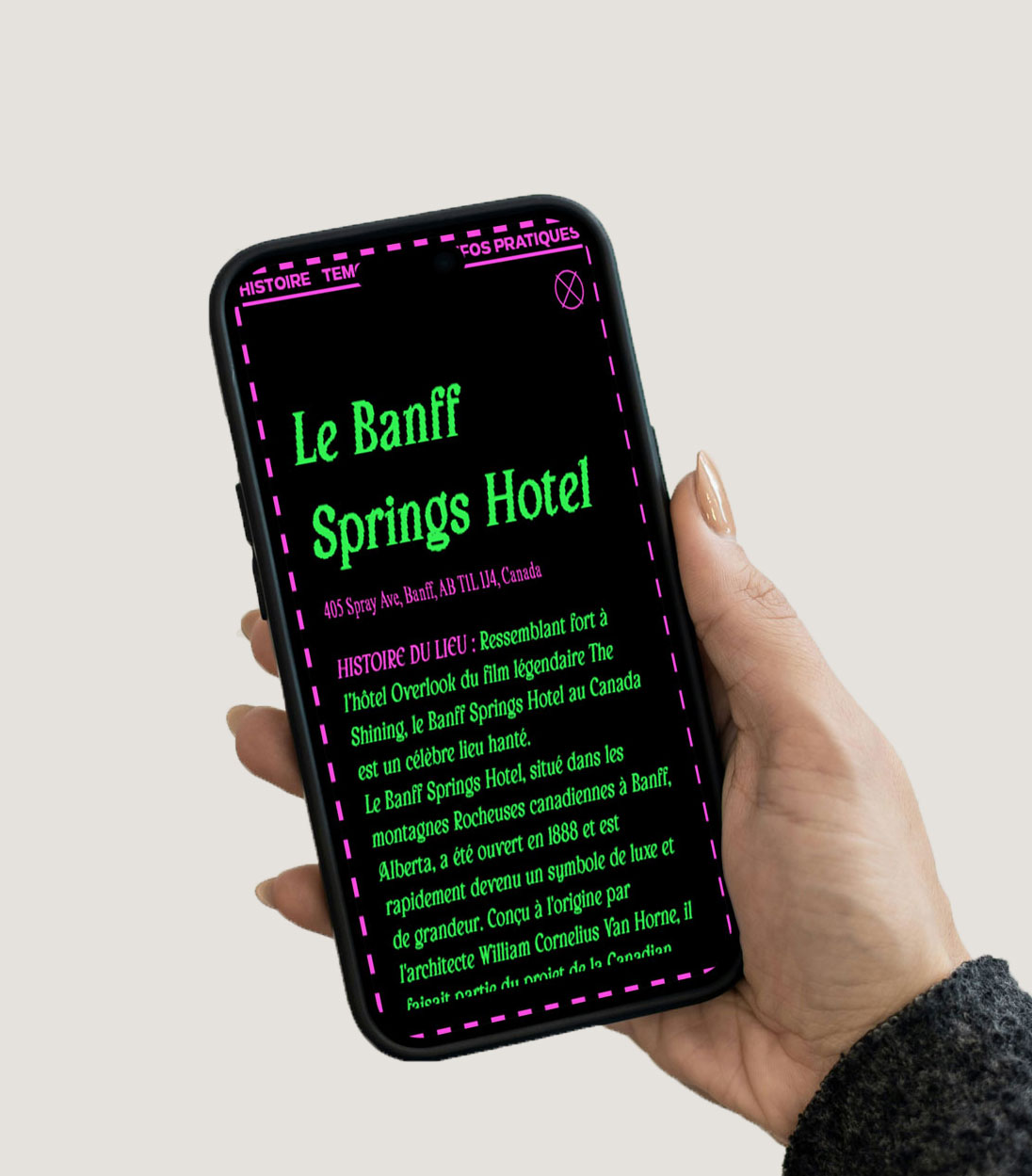
Fantasma Maps is a mapping project
on a theme of my choosing. I chose to explore haunted places
around the world, focusing on
their stories and legends. This work illustrates how
Europe and, especially, America are full of stories where paranormal culture plays a
central role.
To design this project, I was initially inspired by the artist Paul Cox, whose ability to juxtapose shapes and colors particularly impressed me.
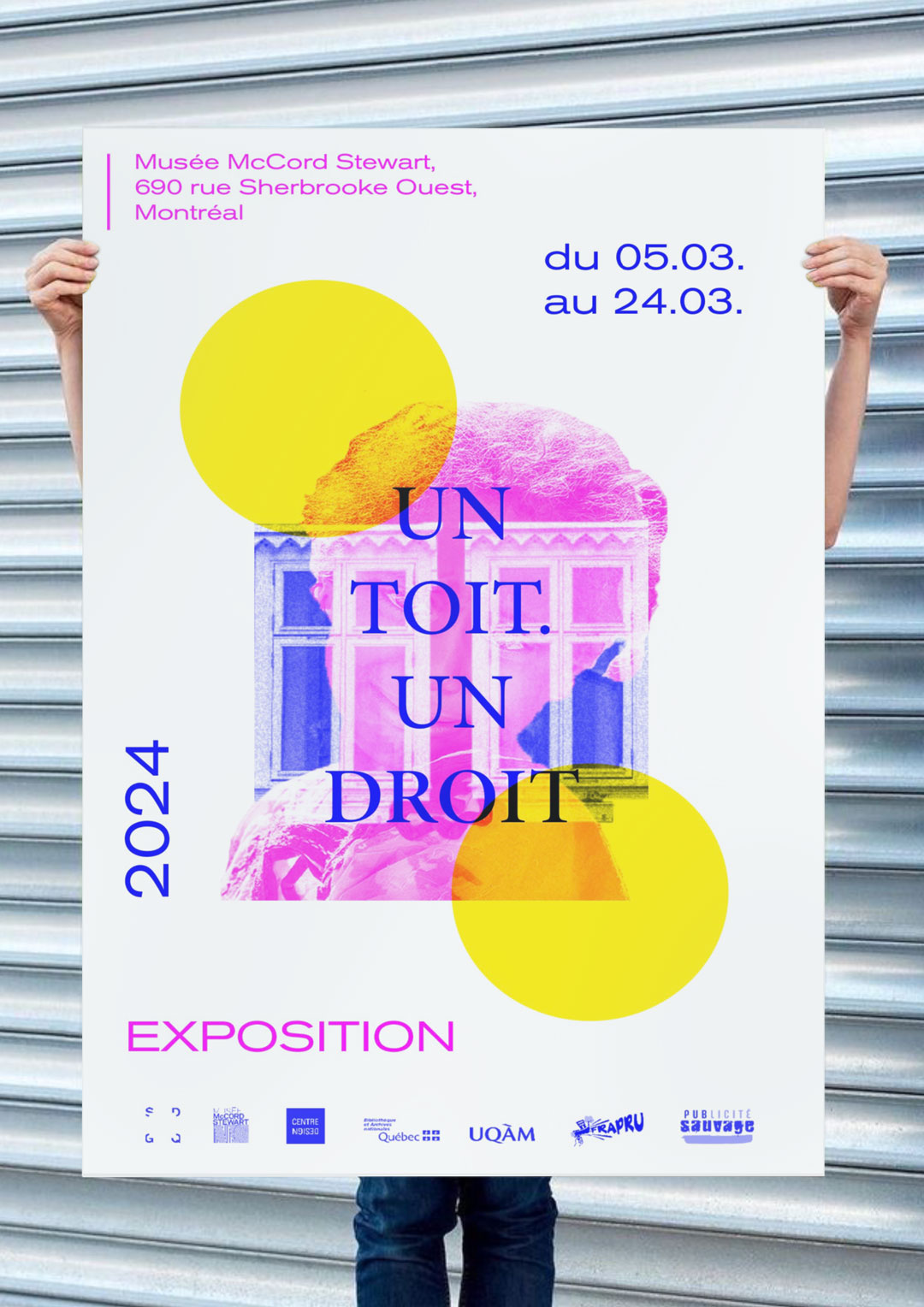
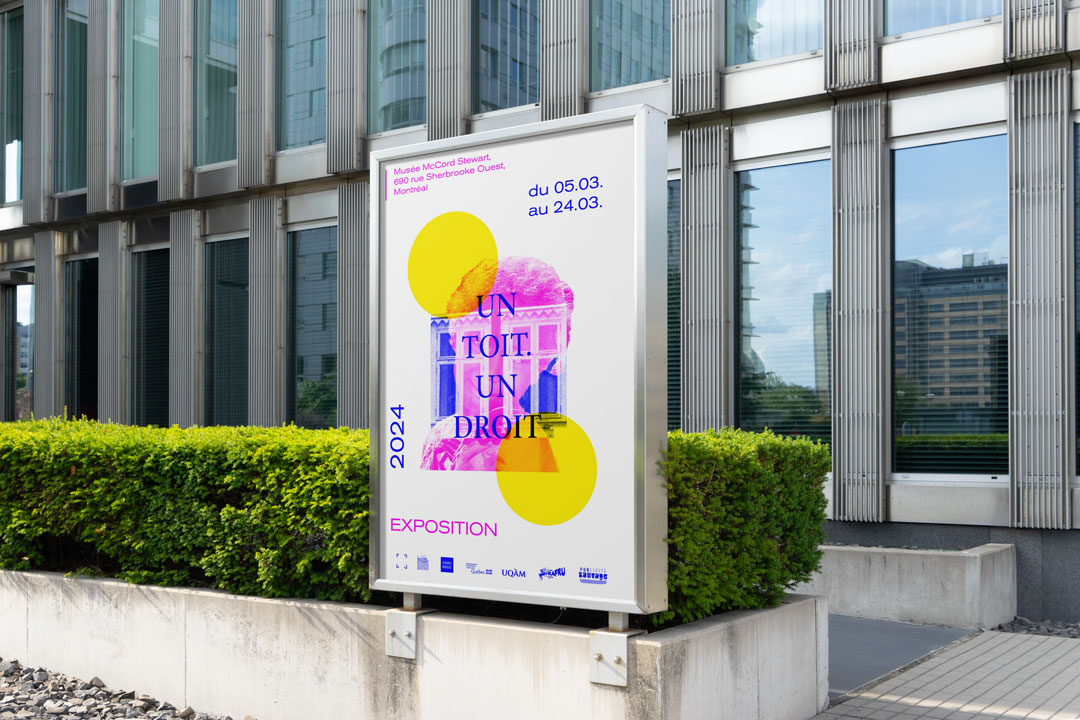
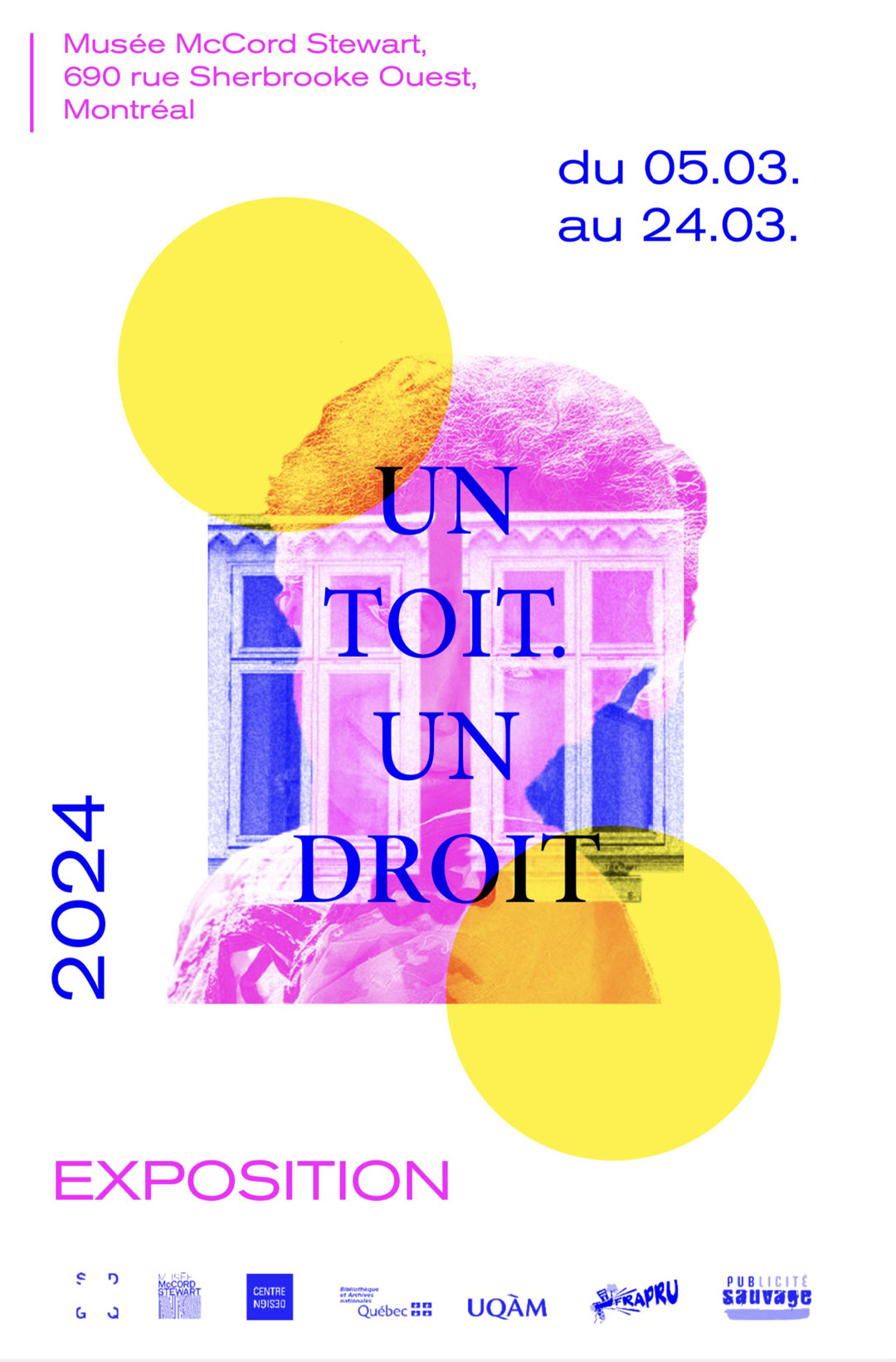
As part of the 2023-2024 poster competition, open to all graphic design students, I had the opportunity to work on an important theme: “A Roof. A Right.”
This competition addresses the issue of housing, a fundamental right recognized internationally, but often treated as a commodity.
Globally, millions of people live in unsanitary housing conditions, in war zones, or in makeshift camps. Furthermore, the rising cost of housing severely impacts the most vulnerable in many cities.
This theme highlights the need for government intervention to guarantee equitable access to housing at a reasonable cost and thus improve the living conditions of the most vulnerable.
PROJECT TYPE
Layout
2023.
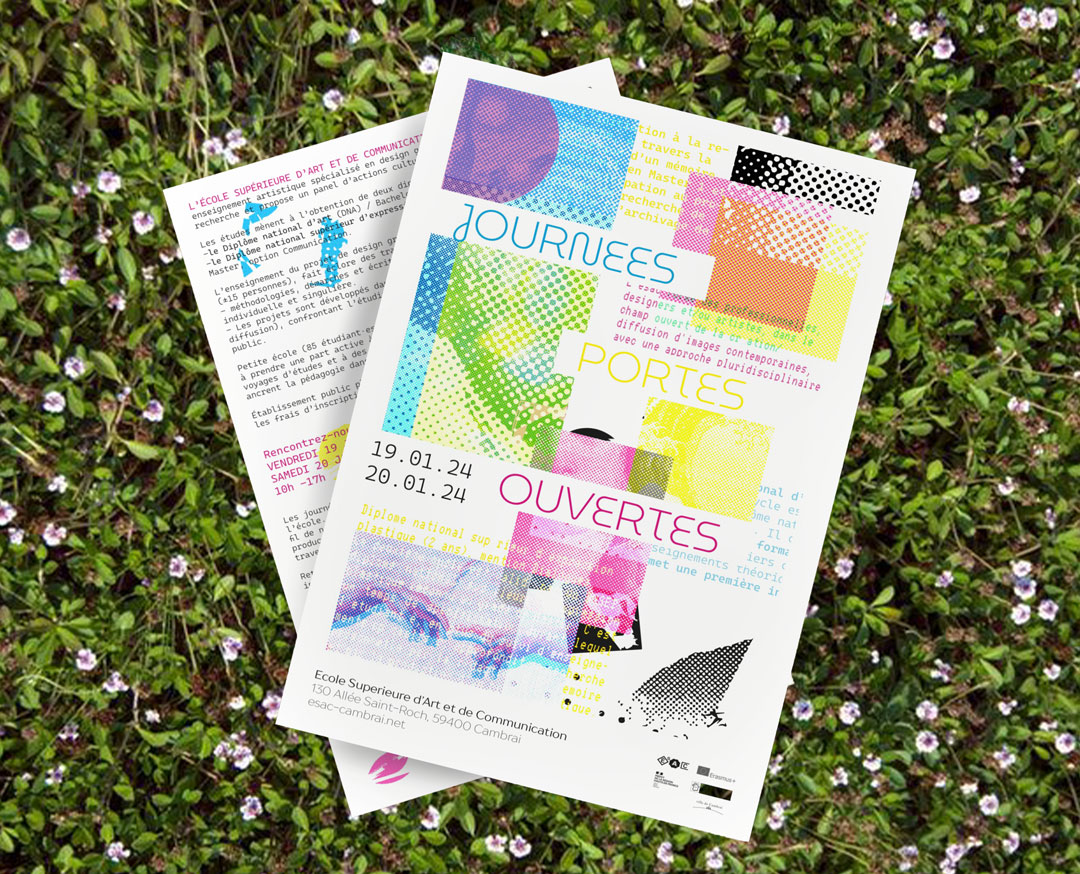
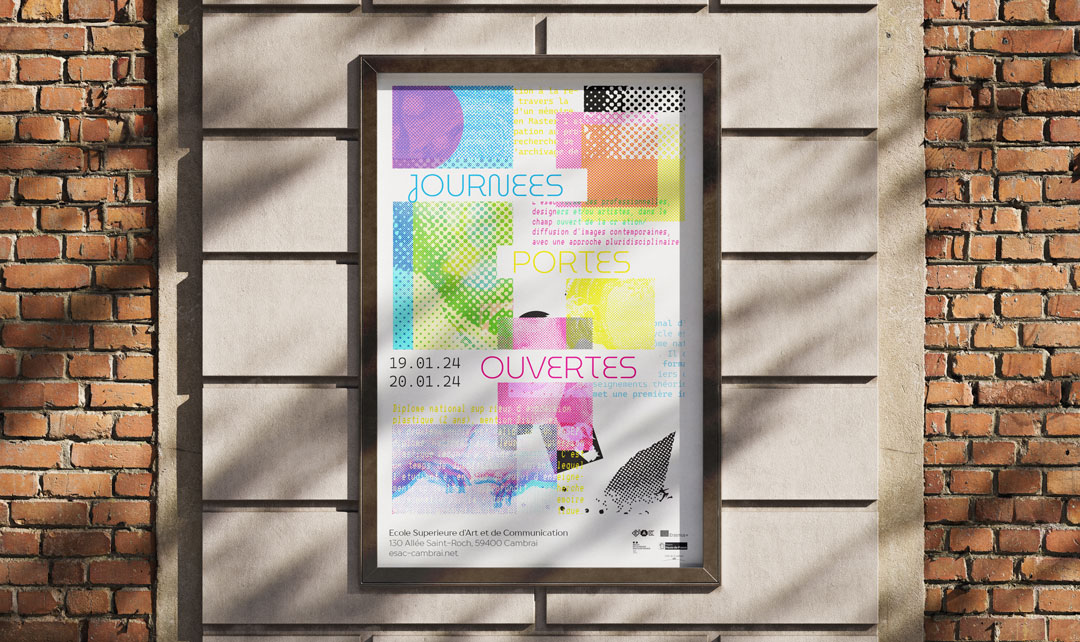
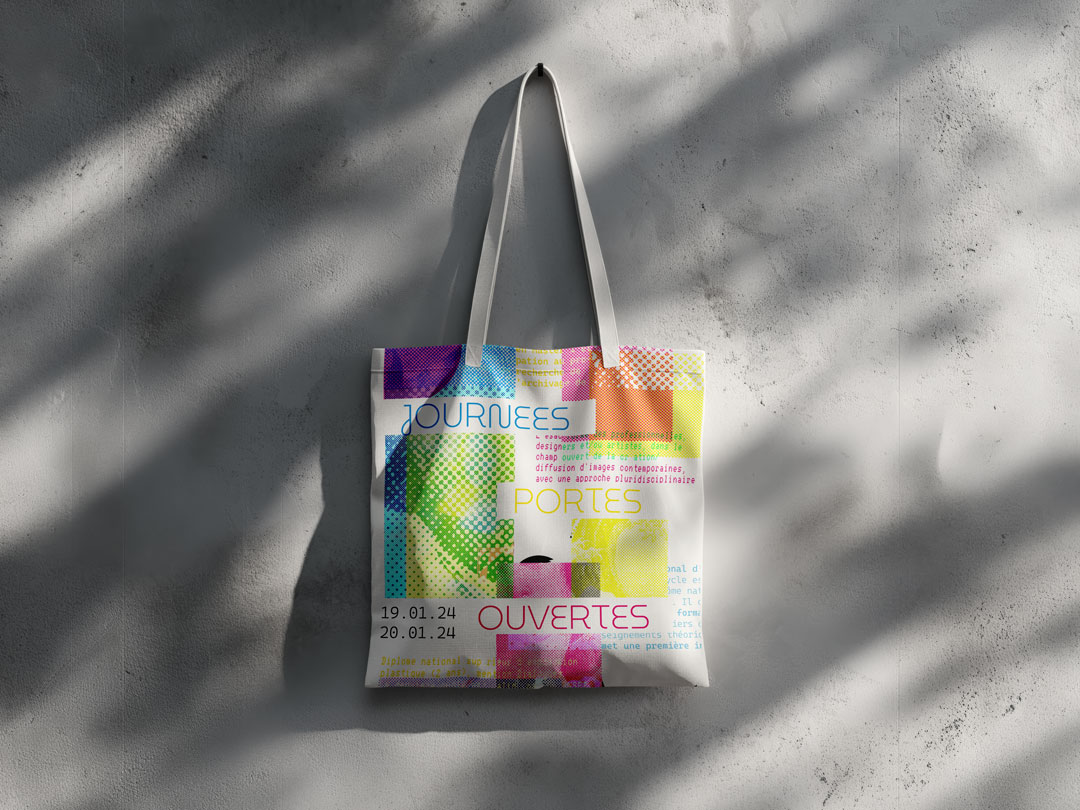
As part of the creation of a graphic identity system for the open house at the Cambrai School of Art and Communication in 2024, the message I wanted to convey revolves around the history of the school, linking it to the evolution of art.
The aim is both to return to the origins and to illustrate how the school has evolved over time by blending artistic references with a modern and digital graphic composition.
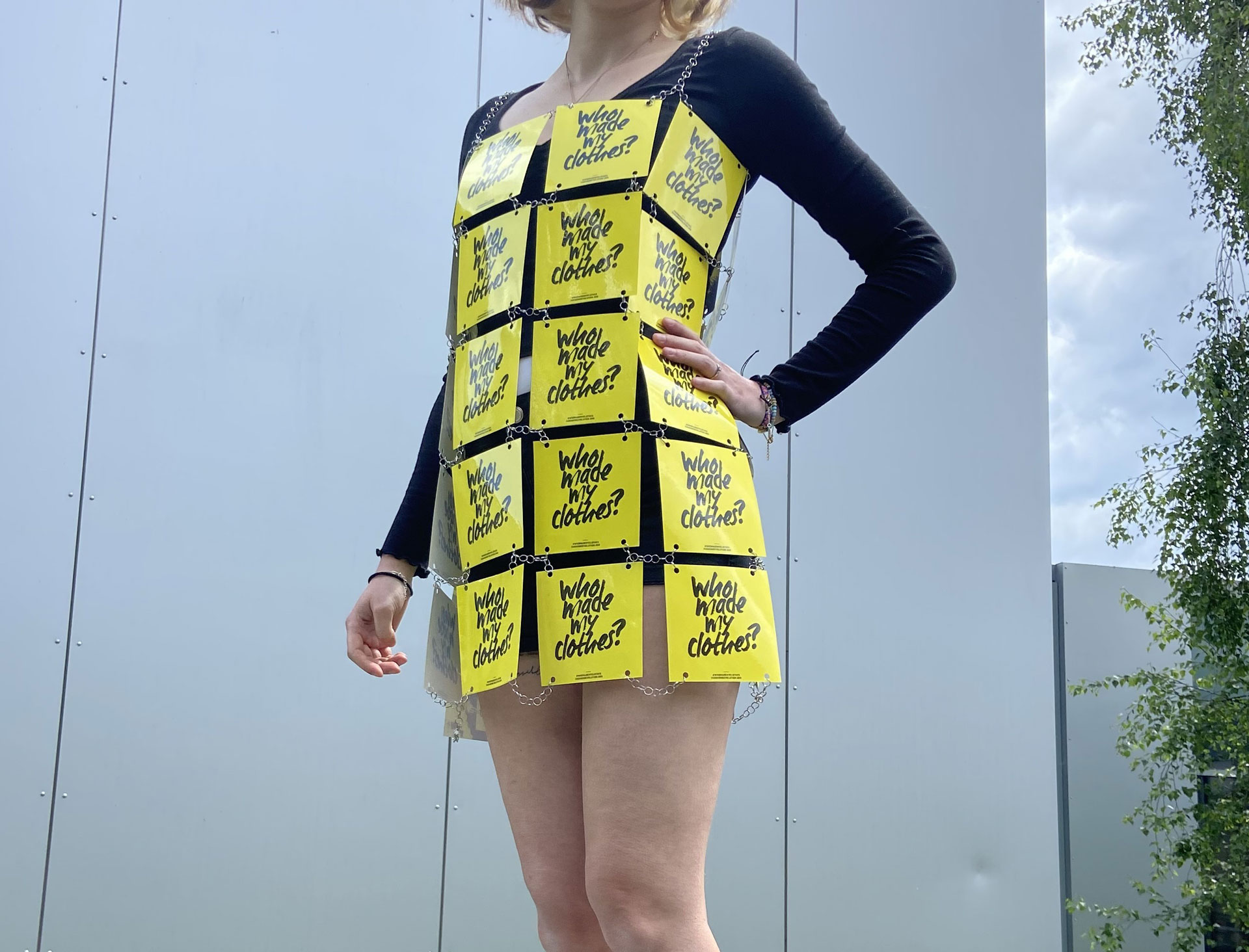
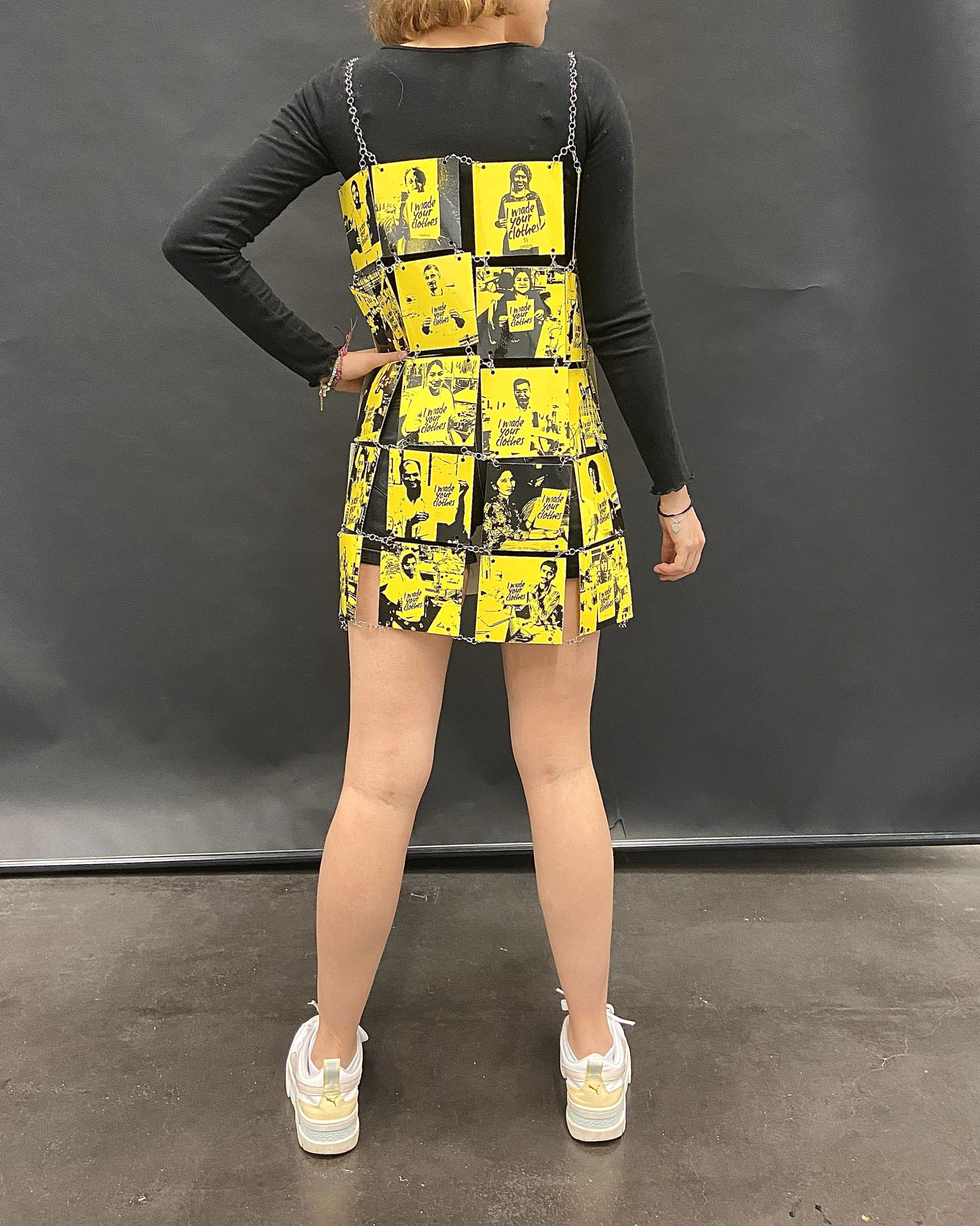
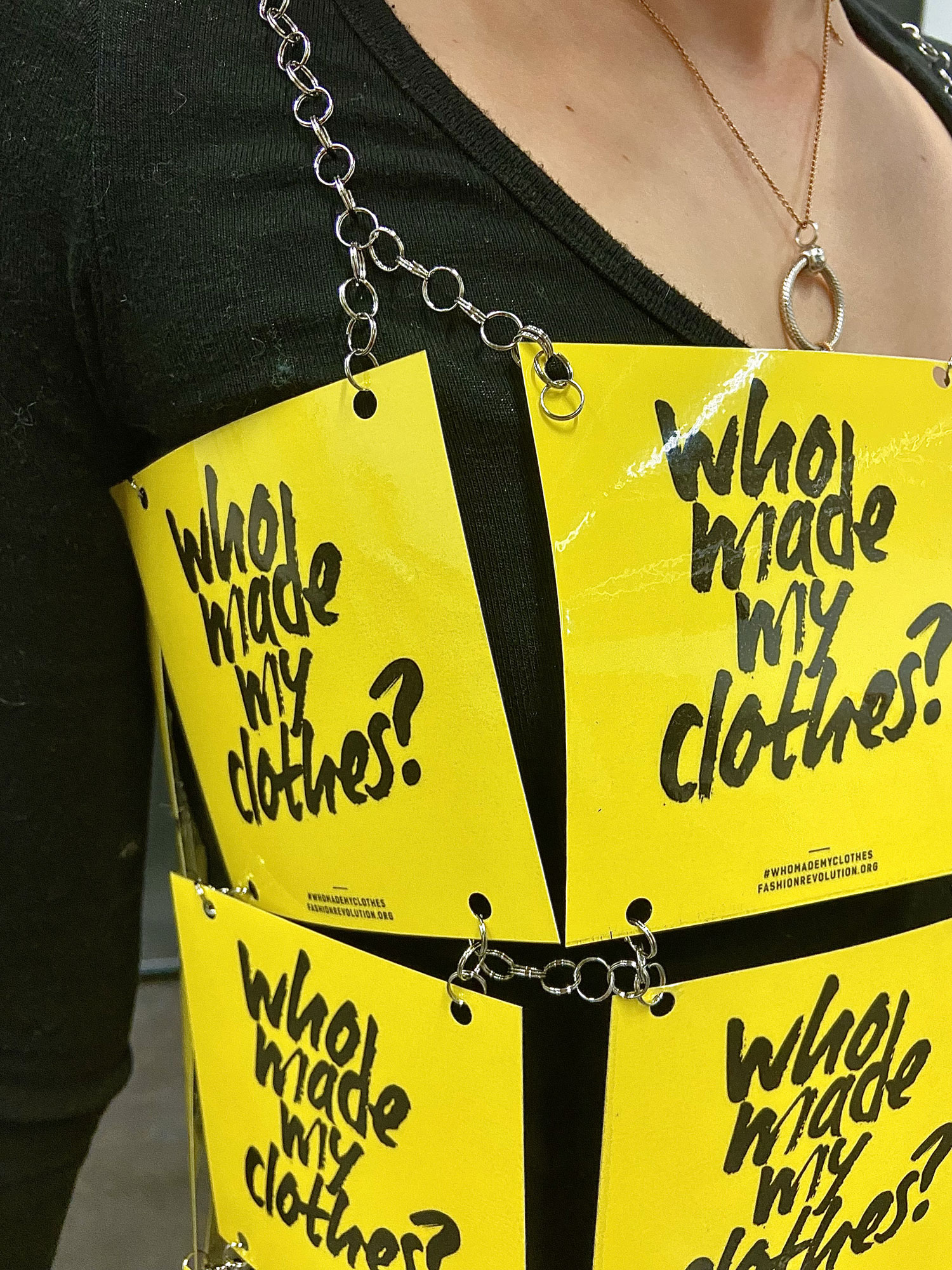
Who’s Made My Clothes is a project I created for Fashion Week. The idea was to wear images, so I chose to create a dress somewhat in the style of Paco Rabanne’s Experimental Dress, made of aluminum squares and rectangles, which he designed in 1966.
However, I added photographs from the “Who’s Made My Clothes” collection, which denounces the conditions of workers in textile companies. This collective, which emerged after the Rana Plaza disaster in 2013, aims to raise awareness about worker exploitation.
I wanted to symbolize this by placing these images behind me, showing that we continue to turn our backs on this reality.
PROJECT TYPE
Textile creation
Installation
Set design
2024.